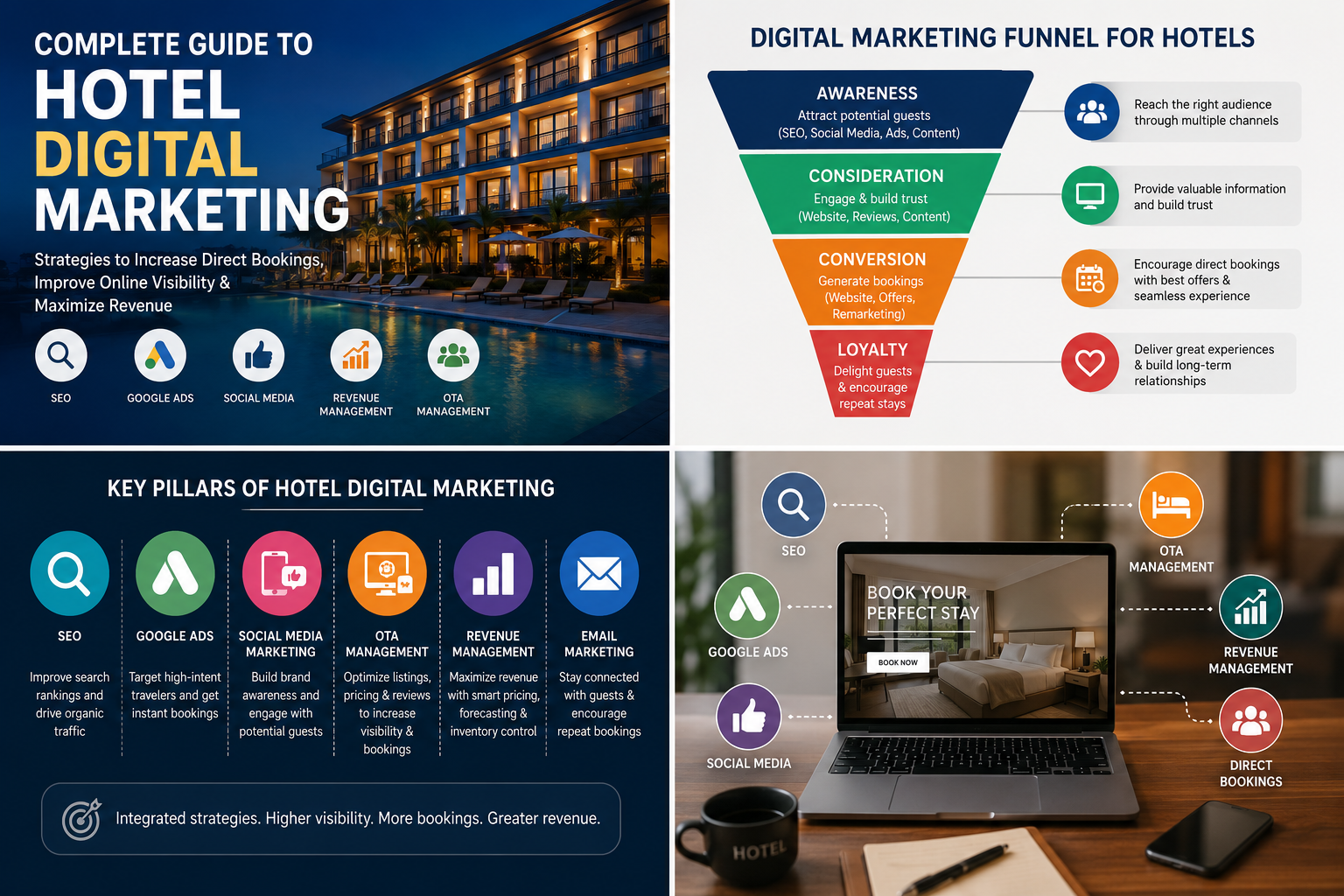
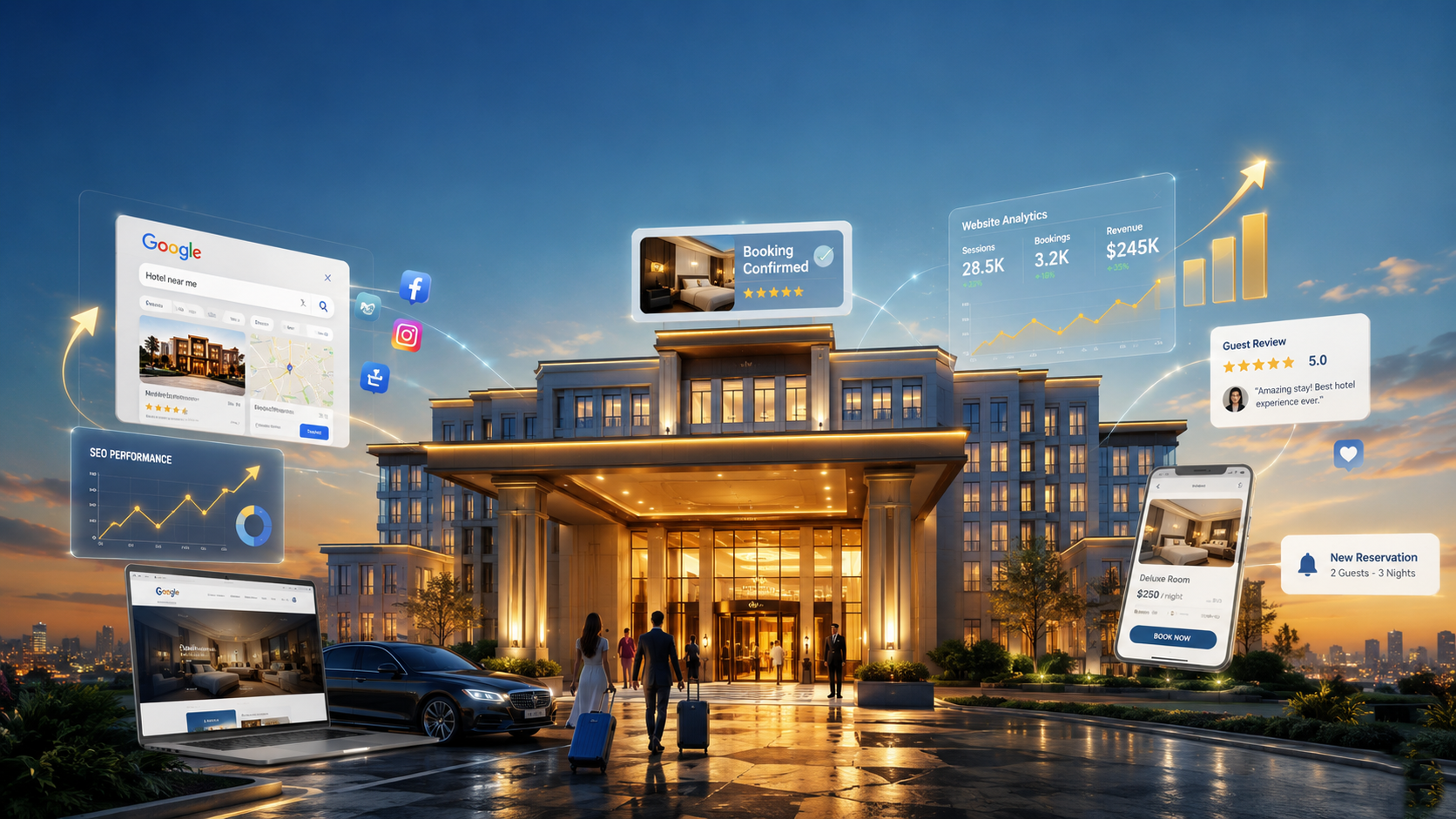
Learn how to increase hotel bookings online with proven SEO, website optimization, local marketing, and direct booking strategies that help hotels maximize revenue.
If your goal is to increase hotel bookings, relying only on Online Travel Agencies (OTAs) like Booking.com or Expedia isn’t enough. While OTAs provide valuable exposure, they also charge significant commissions that reduce your overall profits. The most successful hotels combine OTA visibility with a strong direct booking strategy, a search engine optimized website, and an effective digital marketing plan.
By the end of this guide, you’ll understand how to:
- Increase hotel bookings through your own website
- Improve your hotel’s visibility on Google
- Generate more direct reservations
- Reduce dependency on OTAs
- Build trust with potential guests
- Improve occupancy throughout the year
- Increase long-term hotel revenue
Let’s begin with the foundation of every successful hotel marketing strategy.
Why Every Hotel Needs an Online Booking Strategy
Years ago, travelers often booked hotels through travel agents or by making phone calls. Today, almost every guest begins their journey online.
A traveler planning a vacation or business trip typically searches Google using phrases such as:
- Best hotels in Jaipur
- Luxury hotels near airport
- Family hotels in Goa
- Hotels with swimming pool
- Budget hotels near railway station
If your hotel doesn’t appear during these searches, you’re missing valuable opportunities to increase hotel bookings.
Modern travelers expect to find detailed information instantly. They want to compare prices, browse room photos, read guest reviews, check amenities, and book within minutes.
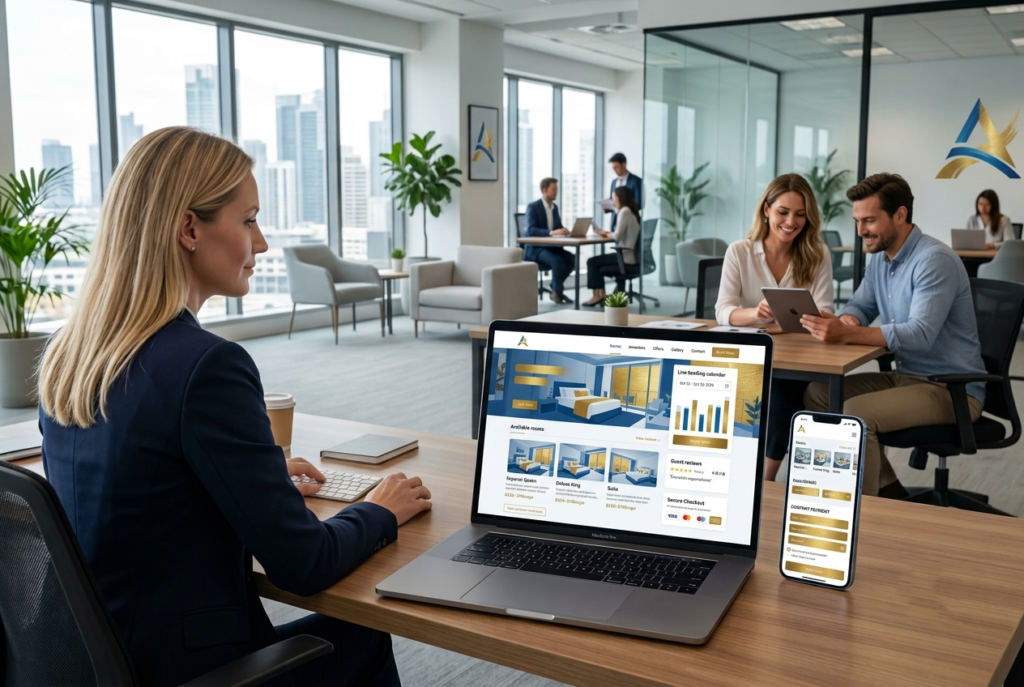
Benefits of an Online Booking Strategy
A well-planned digital strategy helps you:
Increase Direct Revenue
Every direct reservation helps increase hotel bookings without paying high OTA commissions, allowing you to keep more of your revenue.
Improve Customer Relationships
Guests who book directly often receive personalized communication before arrival, creating a better overall experience and encouraging repeat visits.
Strengthen Brand Identity
A professional website and consistent online presence make your hotel appear more trustworthy and memorable.
Increase Occupancy
By reaching travelers across multiple digital channels, hotels can increase hotel bookings throughout both peak and off-peak seasons.
Collect Valuable Guest Data
Direct bookings allow you to collect guest preferences, email addresses, and booking history, making future marketing campaigns much more effective.
Simply put, if you want to increase hotel bookings, your digital strategy should become one of your highest business priorities.
Understanding Today’s Hotel Guest Journey
To successfully increase hotel bookings, you first need to understand how modern travelers make booking decisions.
Today’s guests rarely book the first hotel they see. Instead, they research, compare, and evaluate multiple options before making a final choice.
A typical booking journey looks like this:
Step 1: Inspiration
The journey often begins when someone starts planning a holiday, business trip, wedding, conference, or family vacation.
They search for destinations, attractions, and accommodations online.
At this stage, your hotel’s blog content, destination guides, and social media posts can introduce your property to potential guests.
Step 2: Research
Travelers begin searching for hotels using Google and booking platforms.
They compare:
- Price
- Location
- Room quality
- Amenities
- Guest reviews
- Nearby attractions
- Cancellation policies
Hotels that provide complete, transparent information are more likely to increase hotel bookings during this stage.
Step 3: Website Visit
After discovering your hotel, potential guests usually visit your website.
Within just a few seconds, they decide whether your hotel looks professional and trustworthy.
They expect to find:
- Beautiful room photos
- Clear pricing
- Easy navigation
- Secure booking options
- Mobile-friendly design
- Contact information
A poorly designed website often causes visitors to leave immediately, making it much harder to increase hotel bookings.
Step 4: Review Comparison
Before booking, many travelers read guest reviews on Google, Booking.com, TripAdvisor, and other platforms.
Positive reviews build confidence, while thoughtful responses to negative reviews demonstrate professionalism.
Hotels with strong online reputations naturally increase hotel bookings because travelers trust previous guest experiences.
Step 5: Reservation
Finally, the guest completes the booking.
The booking process should be simple, secure, and quick.
Every unnecessary step increases the chance that the visitor abandons the reservation.
Optimizing each stage of this journey is essential if you want to consistently increase hotel bookings.
Build a High-Converting Hotel Website
Your website is your hotel’s digital front desk.
No matter how much money you spend on advertising or SEO, visitors won’t convert into paying guests if your website fails to create confidence.
A professionally designed website helps increase hotel bookings by providing a smooth and enjoyable booking experience.
Create a Strong First Impression
The homepage should immediately communicate your hotel’s value.
Include:
- High-quality hero image
- Clear booking button
- Hotel overview
- Contact details
- Location
- Featured offers
- Guest ratings
Avoid cluttered layouts or excessive pop-ups.
Visitors should instantly understand why they should choose your property.
Showcase Rooms Professionally
Every room deserves its own dedicated page with:
- Multiple professional photographs
- Room size
- Bed configuration
- Maximum occupancy
- Amenities
- Pricing information
- Availability
- Direct booking button
Detailed room pages answer common questions before guests even ask them, helping increase hotel bookings.
Highlight Your Amenities
Amenities often influence booking decisions.
Clearly display features such as:
- Free Wi-Fi
- Swimming pool
- Restaurant
- Fitness center
- Spa
- Conference rooms
- Free parking
- Airport transfer
- Room service
- Laundry service
- Pet-friendly accommodation
The easier it is for guests to understand what you offer, the more likely they are to complete a reservation.
Optimize Your Hotel Website for User Experience
An attractive website is important, but usability matters even more.
Visitors should never struggle to find information.
If your website is confusing, slow, or difficult to navigate, you’ll lose potential customers before they even reach the booking page.
Improving user experience is one of the simplest ways to increase hotel bookings.
Improve Website Speed
Website speed directly affects both SEO rankings and conversion rates.
A slow website frustrates visitors and increases bounce rates.
To improve speed:
- Compress large images
- Use modern image formats
- Minimize unnecessary plugins
- Enable browser caching
- Choose reliable hosting
- Optimize CSS and JavaScript
- Use a Content Delivery Network (CDN)
Aim for a loading time of under three seconds.
Make Navigation Simple
Guests should be able to reach any important page within a few clicks.
A clean navigation menu should include:
- Rooms
- Dining
- Gallery
- Amenities
- Offers
- Contact
- Location
- Book Now
Simple navigation reduces friction and helps increase hotel bookings by guiding visitors smoothly through the booking process.
Focus on Mobile Users
A significant percentage of hotel searches now happen on smartphones.
Your mobile website should include:
- Responsive design
- Large booking buttons
- Click-to-call functionality
- Easy payment options
- Fast-loading pages
- Simple forms
A seamless mobile experience can dramatically increase hotel bookings, especially from last-minute travelers searching on their phones.
6. Use Professional Photography to Increase Hotel Bookings
One of the fastest and most overlooked ways to increase hotel bookings is investing in professional photography.
Guests cannot physically visit your hotel before making a reservation, so your images become your biggest sales tool. High-quality visuals create a strong first impression, build trust, and encourage visitors to continue exploring your website.
Professional photography should accurately represent your property while highlighting its best features. Avoid using overly edited or misleading images, as they can create unrealistic expectations and lead to negative reviews.
Essential Photos Every Hotel Website Should Include
- Hotel exterior (day and night)
- Reception and lobby
- Guest rooms from multiple angles
- Bathrooms
- Restaurant and dining areas
- Swimming pool
- Gym or fitness center
- Conference and banquet halls
- Spa and wellness facilities
- Rooftop or terrace
- Gardens and outdoor spaces
- Nearby attractions and landmarks
Lifestyle photos showing guests enjoying your facilities can also help visitors imagine their own experience at your property.
Photography Tips
- Use natural lighting whenever possible.
- Capture clean, organized rooms.
- Highlight unique design features.
- Update photos after renovations.
- Display seasonal images if applicable.
High-quality images not only improve your website but also support your Google Business Profile, OTA listings, and social media channels. Better visuals consistently help increase hotel bookings by improving click-through and conversion rates.
7. Write Room Descriptions That Sell
Many hotels make the mistake of writing very short room descriptions, such as:
Deluxe Room with Air Conditioning.
This tells potential guests very little.
Instead, describe the experience guests can expect.
Example
Deluxe King Room
Relax in our spacious Deluxe King Room featuring premium bedding, complimentary high-speed Wi-Fi, a smart TV, elegant interiors, a modern bathroom with luxury toiletries, a dedicated workspace, tea and coffee facilities, and beautiful city views. Designed for both business and leisure travelers, this room combines comfort with convenience.
This type of description helps guests visualize their stay and provides valuable information that influences booking decisions.
Include Important Details
Every room description should mention:
- Room size
- Bed type
- Maximum occupancy
- View
- Bathroom features
- Internet access
- Entertainment options
- Workspace
- Complimentary amenities
- Suitable traveler type
Detailed content helps visitors compare room options more easily, making it easier to increase hotel bookings.
8. Choose the Right Booking Engine
Your booking engine is one of the most important tools for generating direct reservations.
Even if your website attracts thousands of visitors every month, a poor booking system can prevent you from converting those visitors into paying guests.
An effective booking engine should be fast, secure, and simple to use.
Features to Look For
- Real-time availability
- Instant booking confirmation
- Secure payment gateway
- Mobile-friendly interface
- Multiple payment methods
- Promo code support
- Multi-currency support
- Automatic confirmation emails
- Easy cancellation management
- Calendar-based room selection
The goal is to allow guests to complete a reservation within just a few minutes.
The easier your booking process becomes, the easier it becomes to increase hotel bookings through direct channels.
9. Reduce Booking Abandonment
Many potential guests begin the booking process but leave before completing their reservation.
This is known as booking abandonment.
Reducing abandonment can significantly increase hotel bookings without spending additional money on advertising.
Common Reasons Guests Leave
- Hidden charges
- Complicated booking forms
- Slow-loading pages
- Limited payment options
- Mandatory account creation
- Lack of trust signals
- Technical errors
- Confusing pricing
Best Practices
Keep the booking process simple.
Offer:
- Transparent pricing
- Guest checkout
- Secure payment badges
- Multiple payment options
- Progress indicators
- Instant confirmation emails
- Clear cancellation policies
Every unnecessary step increases the chance that visitors abandon the booking.
Simplifying the process is one of the highest-return improvements you can make to increase hotel bookings.
10. Build Trust Through Guest Reviews
Trust plays a major role in every booking decision.
Before choosing a hotel, most travelers read reviews on Google, Booking.com, TripAdvisor, and other review platforms.
Hotels with consistently positive feedback naturally increase hotel bookings because they reduce uncertainty for potential guests.
Encourage Reviews
After checkout, politely ask guests to leave a review.
You can request feedback through:
- SMS
- QR codes at reception
- Printed feedback cards
The easier you make the review process, the more responses you’ll receive.
Respond to Every Review
Whether a review is positive or negative, always respond professionally.
For positive reviews:
- Thank the guest.
- Mention something specific from their stay.
- Invite them to return.
For negative reviews:
- Stay polite.
- Acknowledge the concern.
- Explain any corrective actions.
- Offer to continue the conversation privately if necessary.
Professional responses demonstrate that your hotel values guest feedback.
Display Testimonials on Your Website
Don’t rely only on third-party review websites.
Create a dedicated testimonial section on your own website.
Include:
- Guest name (with permission)
- Location
- Star rating
- Review
- Photo (optional)
Testimonials increase credibility and reassure first-time visitors that your hotel consistently delivers a great guest experience.
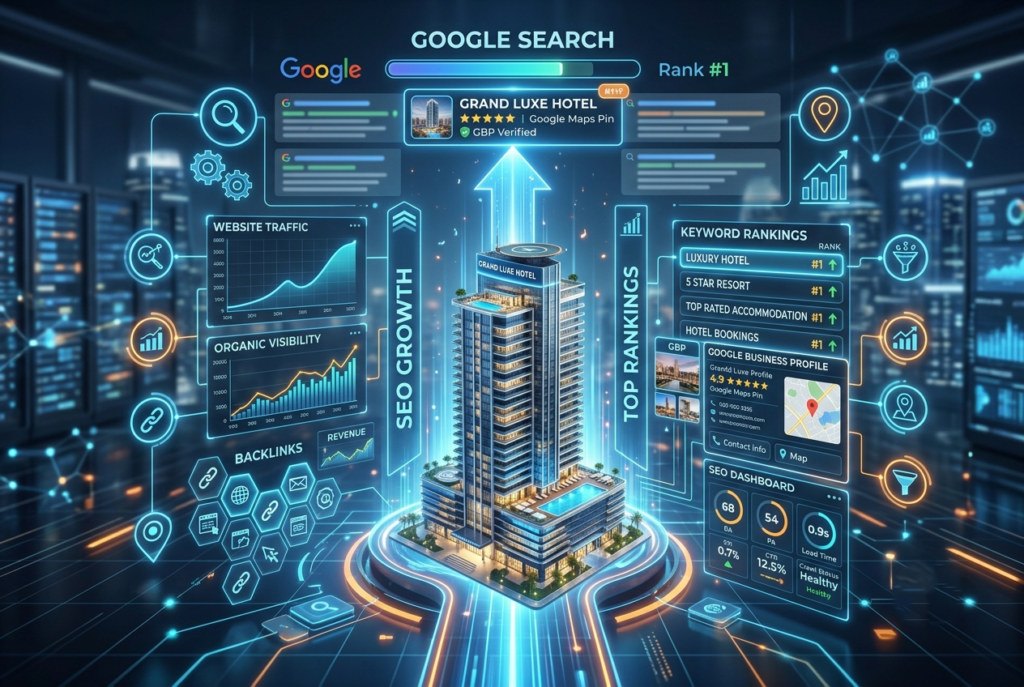
11. Optimize Your Hotel for Local SEO
Local SEO is one of the most effective long-term strategies to increase hotel bookings.
When travelers search for hotels near a destination, Google often displays local search results before traditional website listings.
Examples include:
- Hotels in Varanasi
- Luxury hotels near airport
- Hotels near railway station
- Best family hotels in Jaipur
- Budget hotels in Goa
If your hotel ranks well in these searches, you attract visitors who are already looking to book accommodation.
Local SEO Checklist
Optimize your website by:
- Using location-based keywords naturally
- Creating destination-specific pages
- Embedding Google Maps
- Displaying consistent business information
- Adding structured data (Schema Markup)
- Publishing local travel guides
- Earning genuine customer reviews
- Optimizing page titles and meta descriptions
Strong local SEO helps potential guests discover your hotel exactly when they are ready to make a reservation.
Over time, this strategy can consistently increase hotel bookings while reducing dependence on paid advertising.
12. Optimize Your Google Business Profile to Increase Hotel Bookings
One of the most powerful free marketing tools available to hotels is Google Business Profile (GBP).
When travelers search for hotels in a specific destination, Google often displays a local map with hotel listings before the traditional search results. Appearing in this section can significantly increase hotel bookings, especially from travelers searching with high booking intent.
For example, users frequently search for:
- Hotels near me
- Hotels in Varanasi
- Luxury hotels in Goa
- Best hotels near airport
- Budget hotels with free parking
A fully optimized Google Business Profile increases your chances of appearing in these searches.
Complete Every Business Detail
Many hotels create a profile but leave important information incomplete.
Your profile should include:
- Hotel name
- Correct address
- Phone number
- Website URL
- Business category
- Business hours
- Hotel description
- Check-in and check-out timings
- Amenities
- Accessibility features
- Payment methods
Accurate information improves guest confidence and helps increase hotel bookings.
Upload High-Quality Photos Regularly
Google favors active business profiles.
Upload fresh images of:
- Rooms
- Reception
- Lobby
- Restaurant
- Swimming pool
- Meeting halls
- Rooftop
- Garden
- Hotel exterior
- Seasonal decorations
Fresh content signals that your hotel is active and well-maintained.
Collect More Google Reviews
Reviews influence both rankings and booking decisions.
Encourage satisfied guests to leave honest feedback after checkout.
The more genuine reviews you receive, the easier it becomes to increase hotel bookings through Google Search and Google Maps.
Publish Google Posts
Use Google Posts to share:
- Special offers
- Seasonal discounts
- Festival packages
- Wedding packages
- Business travel offers
- Weekend deals
- Local events
Regular updates keep your profile active and provide additional opportunities to attract travelers.
13. Invest in Hotel SEO to Increase Hotel Bookings
Search Engine Optimization (SEO) remains one of the highest-return marketing investments for hotels.
Unlike paid advertising, SEO continues generating traffic long after your content is published.
Hotels that consistently invest in SEO often increase hotel bookings while reducing their dependence on paid channels and OTA commissions.
Perform Proper Keyword Research
Every SEO strategy begins with understanding what travelers search for.
Examples include:
Primary Keywords
- Increase Hotel Bookings
- Hotel SEO
- Direct hotel bookings
- Hotel marketing
- Online hotel booking
Location Keywords
- Hotels in Mumbai
- Hotels in Varanasi
- Hotels near airport
- Hotels near railway station
Long-Tail Keywords
- Best family hotel in Goa
- Luxury hotel near Delhi Airport
- Affordable hotels in Jaipur
- Hotels with swimming pool in Udaipur
Long-tail keywords often have lower competition and higher conversion rates because they target users with specific booking intent.
Optimize Every Page for SEO
Every important page on your website should include:
- SEO-friendly title tag
- Optimized meta description
- Proper heading structure (H1, H2, H3)
- Internal links
- Image ALT text
- Descriptive URLs
- Fast loading speed
For example:
URL
yourhotel.com/deluxe-room
Instead of
yourhotel.com/page?id=57
Clean URLs improve both user experience and search engine understanding.
Create Location-Specific Landing Pages
Instead of relying on one homepage, create pages targeting different search queries.
Examples:
- Hotels Near Kashi Vishwanath Temple
- Hotels Near Varanasi Junction
- Luxury Hotels in Varanasi
- Business Hotels in Varanasi
- Hotels Near Banaras Hindu University
Each page should provide valuable, unique content.
Avoid copying information between pages, as duplicate content can negatively affect SEO.
Well-optimized location pages help increase hotel bookings by targeting travelers with clear local intent.
Optimize Images for SEO
Images are an important ranking factor for hotel websites.
Before uploading images:
- Compress large files
- Rename image filenames descriptively
- Add relevant ALT text
- Use modern formats like WebP where supported
Example ALT text:
“Luxury hotel room with king-size bed and city view”
Descriptive ALT text improves accessibility and increases the chances of appearing in Google Image Search.
14. Publish High-Quality Blog Content
Many hotel owners overlook blogging because they believe guests only care about room prices.
In reality, informative content attracts travelers long before they are ready to book.
Educational blog posts improve SEO, establish authority, and help increase hotel bookings by bringing qualified visitors to your website.
Examples of blog topics include:
- Best Places to Visit in Varanasi
- Top Things to Do Near Our Hotel
- Complete Travel Guide to Goa
- Business Travel Tips
- Family Vacation Planning Guide
- Best Restaurants Near Our Hotel
- Weekend Itinerary for Jaipur
- Festival Travel Guide
Useful articles keep visitors engaged and encourage them to consider your hotel when planning their trip.
Create Destination Guides
Destination guides perform exceptionally well in search engines because they answer travelers’ questions.
For example:
Three-Day Travel Guide to Varanasi
Include information about:
- Major attractions
- Local food
- Transportation
- Shopping
- Religious sites
- Evening activities
- Safety tips
Naturally recommend your hotel as a convenient accommodation option within the guide.
This creates additional opportunities to increase hotel bookings while genuinely helping travelers.
Answer Frequently Asked Questions
Adding FAQs to important pages improves user experience and increases your chances of appearing in Google’s featured snippets.
Common hotel questions include:
- What time is check-in?
- Do you offer airport pickup?
- Is breakfast included?
- Are pets allowed?
- Do you provide free Wi-Fi?
- Is parking available?
- Can I cancel my booking?
Clear answers reduce uncertainty and improve booking confidence.
15. Optimize for Featured Snippets
Featured snippets appear above standard search results and often receive a significant share of clicks.
Hotels can target featured snippets by answering common questions clearly and concisely.
Examples include:
How can I increase hotel bookings?
Increasing hotel bookings requires a combination of search engine optimization, a fast and mobile-friendly website, positive guest reviews, Google Business Profile optimization, direct booking incentives, social media marketing, and consistent content creation.
Providing structured, well-written answers increases your chances of being selected by Google.
Use Structured Headings
Google prefers content that is organized logically.
Follow a clear hierarchy:
- H1 for the page title
- H2 for main topics
- H3 for supporting sections
Well-structured content improves readability for both users and search engines.
Focus on Helpful Content
Google rewards content that genuinely helps users rather than content created solely for search rankings.
Before publishing any article, ask:
- Does it answer common traveler questions?
- Is the information accurate?
- Does it provide practical advice?
- Would someone find it useful even if they never booked a room?
Creating valuable content builds long-term trust and helps increase hotel bookings through sustainable organic traffic.
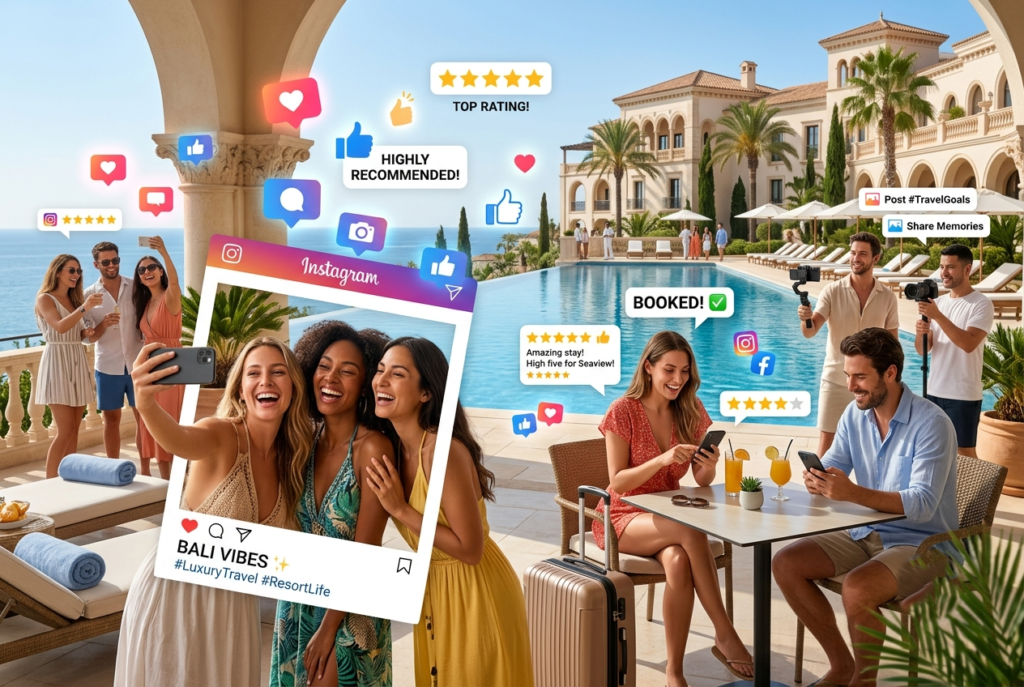
16. Use Social Media Marketing to Increase Hotel Bookings
Social media has become one of the most influential platforms for travelers researching destinations and accommodations. Before booking a hotel, many guests browse Instagram, Facebook, YouTube, and even Pinterest to explore real photos, videos, and guest experiences.
An active social media presence helps increase hotel bookings by building trust, increasing brand awareness, and keeping your hotel visible throughout the customer journey.
Share High-Quality Visual Content
Travel is a visual industry, so your content should inspire potential guests.
Post content such as:
- Room tours
- Drone videos
- Swimming pool highlights
- Restaurant dishes
- Sunrise and sunset views
- Behind-the-scenes videos
- Local attractions
- Guest experiences
- Staff stories
- Festival decorations
Professional visuals create an emotional connection that encourages travelers to choose your hotel.
Maintain a Consistent Posting Schedule
Consistency is more important than posting excessively.
A practical schedule might include:
- 3–5 Instagram posts per week
- Daily Instagram Stories
- 2–3 Facebook posts per week
- 2 YouTube videos each month
- Regular short-form videos for Instagram Reels and YouTube Shorts
Consistent activity keeps your hotel visible and supports efforts to increase hotel bookings.
17. Encourage User-Generated Content
Travelers trust other travelers.
Encourage guests to:
- Tag your hotel
- Share photos
- Upload travel videos
- Leave reviews
- Use your branded hashtag
You can even organize monthly contests featuring the best guest photo or travel story.
User-generated content acts as authentic social proof and often influences future booking decisions.
18. Build an Email Marketing Strategy
Many hotels focus entirely on attracting new guests while overlooking existing customers.
Email marketing is one of the highest ROI marketing channels because it helps convert previous guests into repeat customers.
Repeat guests are often easier and less expensive to acquire than new ones.
Build an Email List
Collect email addresses during:
- Online booking
- Check-in
- Check-out
- Newsletter sign-ups
- Website inquiries
Always obtain permission before sending promotional emails.
Send Valuable Emails
Examples include:
- Seasonal offers
- Holiday packages
- Wedding promotions
- Business travel discounts
- Festival specials
- Loyalty rewards
- Local travel guides
- Birthday offers
Personalized emails help increase hotel bookings by keeping your hotel top of mind.
19. Optimize OTA Listings
Online Travel Agencies (OTAs) remain an important source of bookings.
Instead of avoiding them, optimize your listings while encouraging future direct bookings.
Improve OTA Listings
Ensure every listing includes:
- Professional photographs
- Accurate room descriptions
- Updated amenities
- Current pricing
- Clear cancellation policies
- Recent guest reviews
Higher-quality listings generally achieve better rankings within OTA platforms.
Maintain Pricing Consistency
Guests lose trust when prices differ dramatically across platforms.
Use a consistent pricing strategy while offering additional benefits for direct bookings, such as:
- Complimentary breakfast
- Free airport pickup
- Early check-in (subject to availability)
- Late check-out
- Discounted spa services
These incentives encourage guests to book directly during future visits.
20. Use Revenue Management to Increase Hotel Bookings
Pricing plays a major role in booking decisions.
Successful hotels adjust room rates based on market demand instead of maintaining fixed prices throughout the year.
Dynamic pricing helps maximize occupancy and revenue simultaneously.
Factors Affecting Pricing
- Seasonality
- Local events
- Weekends
- Public holidays
- Competitor pricing
- Occupancy levels
- Advance booking period
Revenue management software can automate many pricing adjustments while ensuring your hotel remains competitive.
21. Invest in Google Ads
SEO delivers excellent long-term results, but Google Ads provides immediate visibility.
Paid search campaigns help increase hotel bookings by placing your hotel at the top of search results for high-intent keywords.
Examples include:
- Luxury hotel in Varanasi
- Hotel near airport
- Family hotel in Goa
- Business hotel in Delhi
- Best hotel near railway station
Best Practices
- Target high-intent keywords.
- Use location targeting.
- Write compelling ad copy.
- Include pricing when appropriate.
- Add call extensions.
- Use sitelink extensions.
- Direct visitors to relevant landing pages.
Continuously monitor campaign performance and optimize based on conversion data.
22. Advertise on Facebook and Instagram
Social media advertising allows hotels to reach travelers based on:
- Destination interest
- Travel behavior
- Demographics
- Location
- Age
- Interests
- Previous website visits
Popular campaign objectives include:
- Brand awareness
- Website traffic
- Lead generation
- Direct bookings
- Special offers
- Event promotions
High-quality visuals combined with persuasive copy often produce excellent engagement.
23. Use Retargeting Campaigns
Not every visitor books during their first visit.
Retargeting allows you to reconnect with users who previously visited your website but did not complete a reservation.
You can remind them through display ads on:
- Google Display Network
Effective retargeting messages include:
- Limited-time discounts
- Weekend offers
- Festival packages
- Exclusive direct booking benefits
Retargeting is an effective way to increase hotel bookings while maximizing the value of your existing website traffic.
24. Monitor Performance with Analytics
Successful marketing decisions rely on data rather than assumptions.
Track important metrics using tools such as:
- Google Analytics
- Google Search Console
- Google Business Profile Insights
- Booking engine reports
- Advertising dashboards
Important Metrics
Monitor:
- Website traffic
- Organic search visitors
- Direct bookings
- Conversion rate
- Bounce rate
- Average booking value
- Revenue per visitor
- Occupancy rate
- Cost per acquisition
Regular analysis helps identify which strategies generate the strongest return on investment.
Continuously Improve Your Marketing Strategy
Digital marketing is never a one-time project.
Consumer behavior, search algorithms, and travel trends continue to evolve.
Hotels that regularly review their performance, test new ideas, and improve their online presence consistently outperform competitors.
Areas to review include:
- Website speed
- Mobile experience
- Booking process
- SEO rankings
- Guest reviews
- Advertising campaigns
- Email performance
- Social media engagement
Small improvements made consistently often produce significant long-term growth.
25. Create an Exceptional Guest Experience
No marketing campaign can compensate for a poor guest experience.
The happiest guests become your most effective marketing channel. They recommend your hotel to family and friends, leave positive reviews, and often return for future stays.
Providing an exceptional experience is one of the most reliable ways to increase hotel bookings organically.
Focus on Every Guest Touchpoint
From the first website visit to post-checkout communication, every interaction shapes a guest’s perception of your hotel.
Pay close attention to:
- Quick booking confirmations
- Friendly check-in experience
- Clean and comfortable rooms
- Professional staff behavior
- Fast issue resolution
- Personalized recommendations
- Smooth check-out process
- Follow-up communication after departure
Guests remember experiences more than facilities.
Even a modest hotel can successfully increase hotel bookings by consistently delivering outstanding hospitality.
Personalize Every Stay
Modern travelers appreciate personalized experiences.
Simple gestures can make a lasting impression, such as:
- Welcome notes
- Birthday greetings
- Anniversary surprises
- Local travel recommendations
- Complimentary refreshments
- Personalized room preferences
Collect guest preferences during each visit and use this information to improve future stays.
Personalization increases guest satisfaction and encourages repeat reservations.
Build a Strong Loyalty Program
Acquiring new customers is often more expensive than retaining existing ones.
A well-designed loyalty program encourages guests to return instead of trying competing hotels.
Examples include:
- Exclusive member discounts
- Free room upgrades
- Complimentary breakfast
- Late check-out
- Early check-in
- Reward points
- Referral bonuses
- Birthday benefits
Loyal guests become repeat customers, helping your hotel increase hotel bookings without relying heavily on paid advertising.
Encourage Direct Bookings
Many hotels depend heavily on Online Travel Agencies (OTAs). While OTAs are excellent for visibility, they also charge commission fees that reduce profitability.
Encouraging guests to book directly through your website helps increase hotel bookings while improving revenue.
Offer exclusive benefits that are available only on your official website, such as:
- Best price guarantee
- Complimentary breakfast
- Flexible cancellation
- Free airport transfer
- Room upgrades (subject to availability)
- Welcome drinks
- Discount vouchers for future stays
These incentives make direct booking more attractive without violating OTA pricing policies.
Partner with Local Businesses
Strategic partnerships can create additional value for guests and generate more reservations.
Consider collaborating with:
- Tour operators
- Travel agencies
- Local restaurants
- Taxi services
- Event organizers
- Wedding planners
- Conference organizers
- Adventure activity providers
These partnerships allow you to create attractive travel packages that differentiate your hotel from competitors.
Leverage Seasonal Marketing Campaigns
Every destination has unique travel seasons.
Instead of running the same promotions throughout the year, create campaigns tailored to local demand.
Examples include:
Summer Vacation Packages
Offer:
- Family discounts
- Kids stay free promotions
- Swimming pool access
- Sightseeing packages
Festival Offers
Create special packages during:
- Diwali
- Christmas
- New Year
- Holi
- Eid
- Local cultural festivals
Wedding Season Promotions
Provide:
- Group booking discounts
- Complimentary event planning support
- Honeymoon suites
- Decoration packages
Invest in Video Marketing
Video content has become one of the most engaging forms of digital marketing.
Travelers often prefer watching a short hotel tour instead of reading long descriptions.
Create videos featuring:
- Room walkthroughs
- Hotel amenities
- Restaurant experiences
- Local attractions
- Guest testimonials
- Staff introductions
- Behind-the-scenes content
Upload videos to:
- YouTube
- Instagram Reels
- TikTok (where relevant)
Embedding videos on your website can also increase visitor engagement and time spent on the page.
Monitor Competitor Strategies
Successful hotels regularly analyze their competitors.
This doesn’t mean copying them—it means understanding industry trends and identifying opportunities.
Evaluate competitors based on:
- Pricing
- Guest reviews
- Website quality
- Amenities
- Promotional offers
- SEO performance
- Social media activity
Regular competitor analysis helps you stay competitive and discover new ways to increase hotel bookings.
Common Mistakes That Prevent Hotels from Increasing Bookings
Even hotels with excellent facilities can struggle if they make avoidable marketing mistakes.
Here are some of the most common issues:
Outdated Website
An old, slow, or poorly designed website reduces trust and conversions.
Poor Mobile Experience
Most travelers now browse and book using smartphones.
If your mobile experience is frustrating, you risk losing valuable reservations.
Low-Quality Photos
Blurry or outdated images reduce confidence and discourage bookings.
Ignoring Guest Reviews
Failing to respond to reviews can negatively affect your online reputation.
Weak SEO
Without search engine optimization, potential guests may never discover your hotel.
Overdependence on OTAs
Relying exclusively on third-party booking platforms limits profitability and control over guest relationships.
Inconsistent Branding
Using different logos, descriptions, or contact information across platforms creates confusion and weakens trust.
Avoiding these mistakes can significantly increase hotel bookings while improving the overall guest experience.
Emerging Hospitality Trends to Watch
The hospitality industry continues to evolve as traveler expectations change.
Hotels that adapt quickly often gain a competitive advantage.
Important trends include:
- AI-powered customer support
- Contactless check-in and check-out
- Smart room technology
- Sustainable hospitality practices
- Eco-friendly accommodations
- Personalized travel experiences
- Voice search optimization
- Mobile-first booking experiences
- Data-driven pricing strategies
- Virtual hotel tours
Adopting relevant innovations can help your property stand out in a competitive market and continue to increase hotel bookings in the years ahead.
Looking Ahead
The strategies covered throughout this guide demonstrate that there is no single technique that will increase hotel bookings overnight. Sustainable growth comes from combining excellent guest experiences with strong digital marketing, search visibility, reputation management, and ongoing optimization.
Hotels that consistently evaluate their performance, embrace new technologies, and focus on guest satisfaction are best positioned for long-term success.
FAQs, Conclusion & Expert Hospitality Marketing Support
Frequently Asked Questions (FAQs)
1. What is the fastest way to increase hotel bookings?
The fastest way to increase hotel bookings is by combining Google Ads with an optimized hotel website and a fully optimized Google Business Profile. Paid advertising can generate immediate visibility, while SEO and content marketing build sustainable long-term traffic.
2. How can I increase hotel bookings without relying only on OTAs?
To increase hotel bookings independently, focus on:
- Hotel SEO
- A fast and mobile-friendly website
- Direct booking offers
- Google Business Profile optimization
- Email marketing
- Social media marketing
- Guest loyalty programs
- Reputation management
A balanced strategy reduces OTA commission costs while improving direct revenue.
3. Does SEO really help increase hotel bookings?
Yes.
SEO helps your hotel appear in Google Search when travelers are actively looking for accommodation. Unlike paid advertising, SEO continues generating traffic over time, making it one of the most cost-effective methods to increase hotel bookings.
4. Why is Google Business Profile important?
Google Business Profile helps travelers discover your hotel through Google Search and Google Maps.
A well-maintained profile with updated photos, accurate information, and positive reviews can significantly increase hotel bookings, especially from guests searching for nearby accommodations.
5. How important are guest reviews?
Guest reviews strongly influence booking decisions.
Positive reviews build trust, improve local SEO, and encourage more travelers to choose your property. Responding professionally to every review also demonstrates excellent customer service.
6. Should hotels invest in Google Ads?
Yes.
Google Ads is an excellent option for hotels that want immediate visibility. When managed correctly, it attracts highly targeted visitors who are actively searching for accommodation, helping increase hotel bookings quickly while complementing your long-term SEO strategy.
7. Is social media useful for hotels?
Absolutely.
Platforms like Instagram, Facebook, and YouTube help showcase your rooms, amenities, local attractions, and guest experiences. Consistent, high-quality content builds brand awareness and supports efforts to increase hotel bookings over time.
8. How often should hotel websites publish blogs?
Publishing two to four high-quality articles each month is a practical goal for most hotels.
Topics such as destination guides, travel tips, seasonal events, and local attractions help improve search visibility and attract potential guests before they begin comparing hotels.
Final Thoughts
The hospitality industry continues to evolve, and guest expectations are higher than ever before. Travelers want convenience, transparency, excellent service, and confidence that they are choosing the right property.
Throughout this guide, we’ve explored proven strategies to increase hotel bookings, including:
- Building a fast, user-friendly hotel website
- Improving mobile booking experiences
- Optimizing for search engines
- Strengthening your Google Business Profile
- Publishing valuable travel content
- Leveraging social media and email marketing
- Optimizing OTA listings
- Using Google Ads and Meta Ads effectively
- Encouraging direct bookings
- Managing online reviews
- Delivering exceptional guest experiences
- Tracking performance with analytics
No single tactic guarantees success. Hotels that consistently increase hotel bookings are those that integrate multiple strategies into a unified marketing plan and continuously refine their approach based on guest feedback and performance data.
The digital landscape will continue to change, but one principle remains constant: hotels that provide value, maintain a strong online presence, and prioritize the guest experience are best positioned for long-term growth.
How Digital Janxii Helps Hotels Increase Hotel Bookings
Our Hospitality Marketing Services
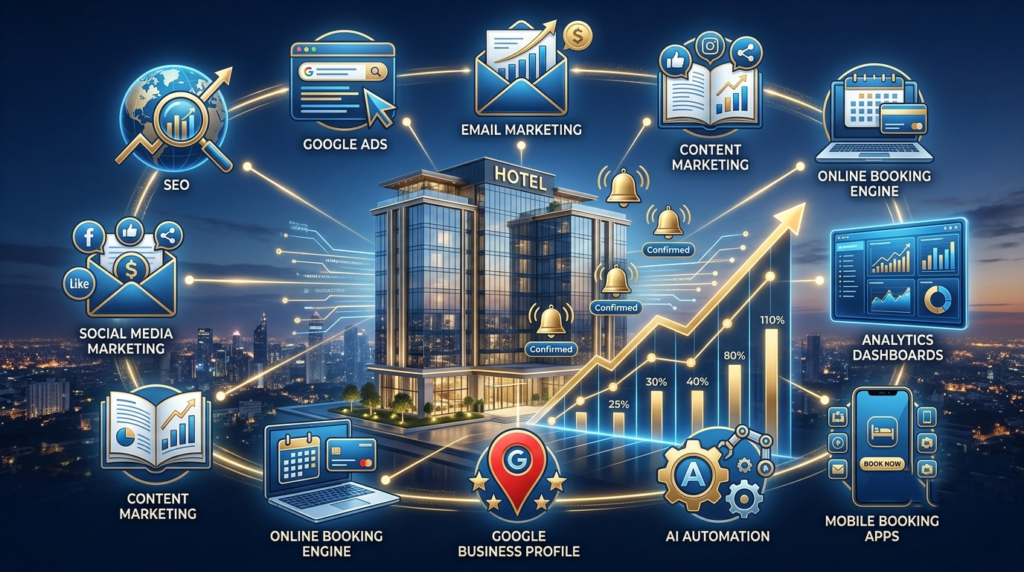
We offer comprehensive digital marketing solutions, including:
- Hotel SEO (Search Engine Optimization)
- Local SEO for Hotels
- Google Business Profile Optimization
- Hotel Website Design & Development
- High-Converting Booking Website Development
- Google Ads (PPC) Management
- Meta (Facebook & Instagram) Advertising
- Content Marketing
- Travel Blog Writing
- Technical SEO Audits
- Conversion Rate Optimization (CRO)
- Reputation Management
- Performance Marketing
- Website Speed Optimization
- Analytics & Conversion Tracking
Whether you’re an independent hotel, luxury resort, business hotel, heritage property, or vacation rental, our strategies are tailored to your property’s goals, target audience, and market.
Instead of applying generic marketing tactics, we build customized campaigns designed to increase hotel bookings, improve occupancy, and maximize return on investment.
Why Choose Digital Janxii?
Hotels choose Digital Janxii because we focus on measurable business outcomes rather than vanity metrics.
When you partner with us, you benefit from:
- Customized hotel marketing strategies
- Transparent reporting
- Ethical, white-hat SEO practices
- Mobile-first website optimization
- Data-driven campaign management
- Continuous performance improvements
- Global hospitality marketing expertise
- Personalized support
Our approach follows Google’s best practices and emphasizes sustainable growth rather than short-term gains.
Whether your objective is to rank higher on Google, generate more direct bookings, reduce OTA dependency, or expand into new markets, our team develops strategies aligned with your business goals.
Ready to Increase Hotel Bookings?
If you’re looking for a trusted digital marketing partner to help increase hotel bookings, improve your hotel’s online visibility, and generate more direct reservations, Digital Janxii is ready to help.
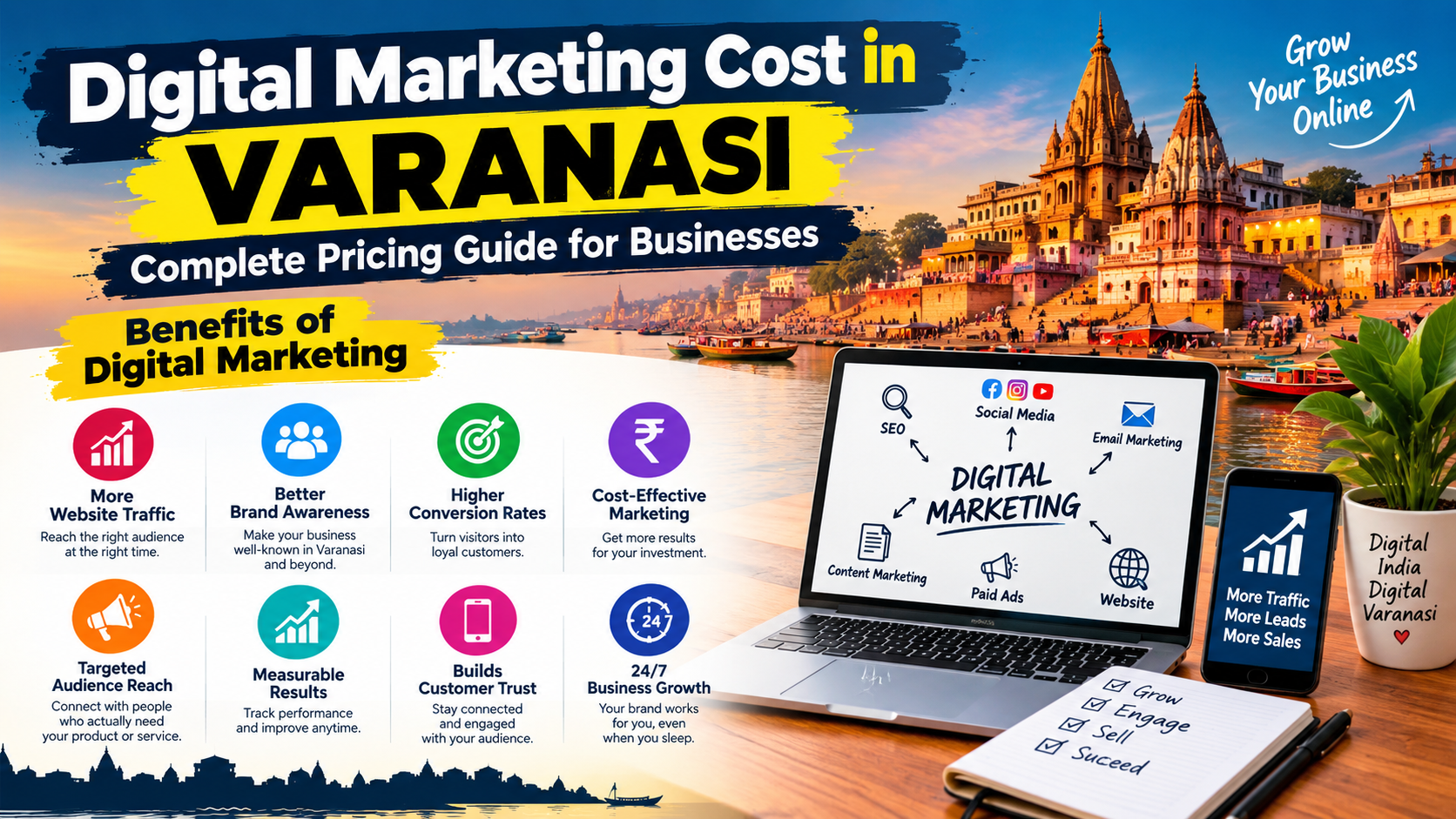
Based in Varanasi, India, and serving hospitality businesses worldwide, we combine SEO, website development, paid advertising, content marketing, and conversion optimization to help hotels achieve measurable, long-term growth.
The right digital strategy doesn’t just attract more visitors—it attracts the right guests, converts more bookings, and builds a stronger hospitality brand for the future.
About the Author