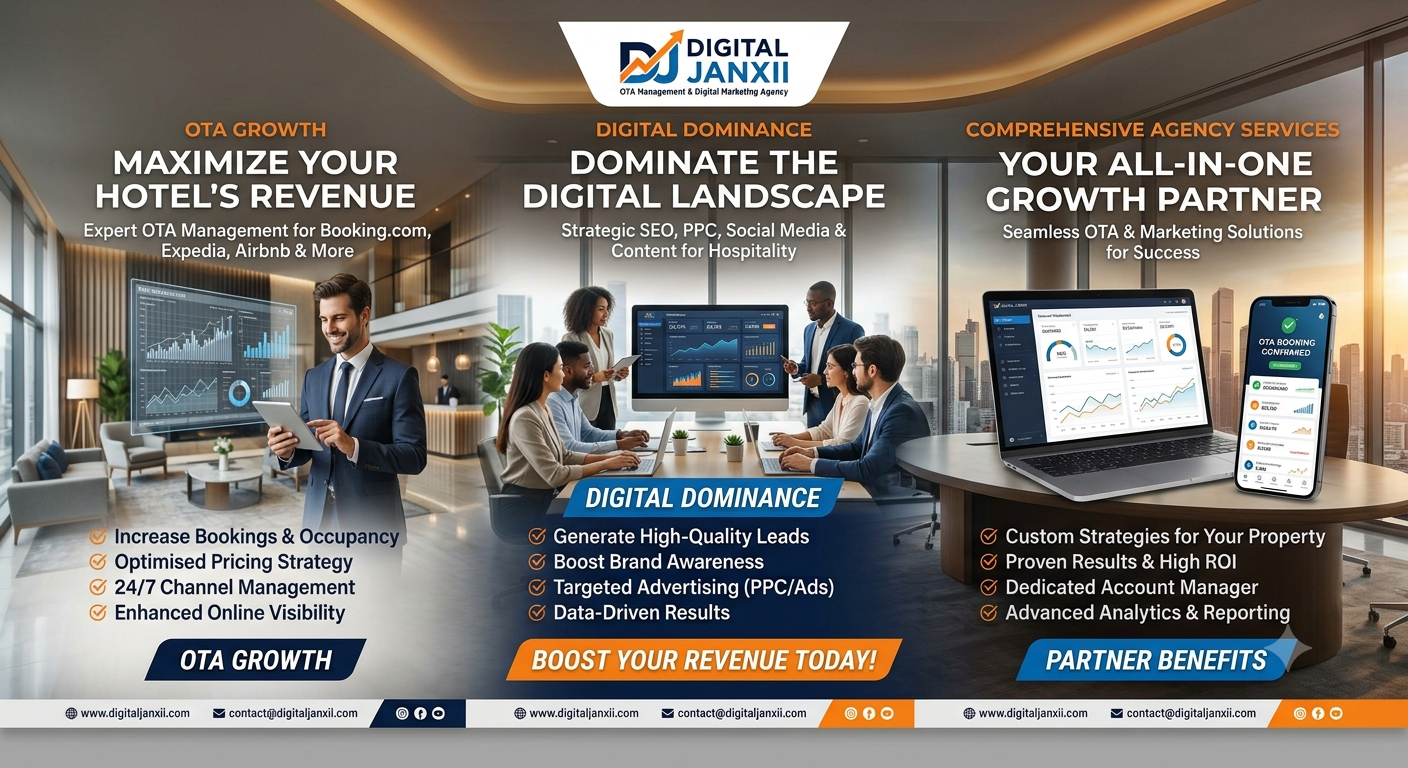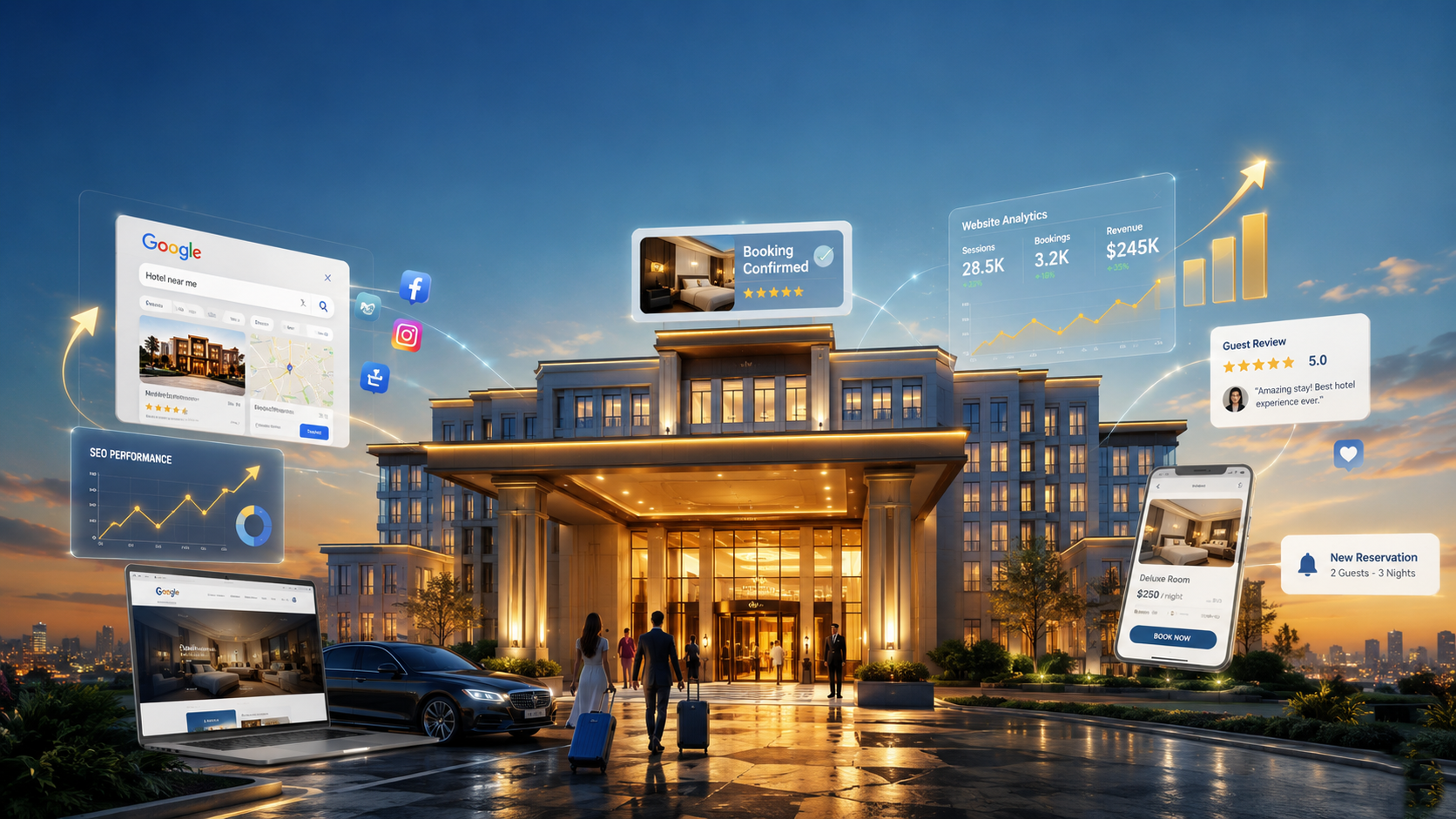
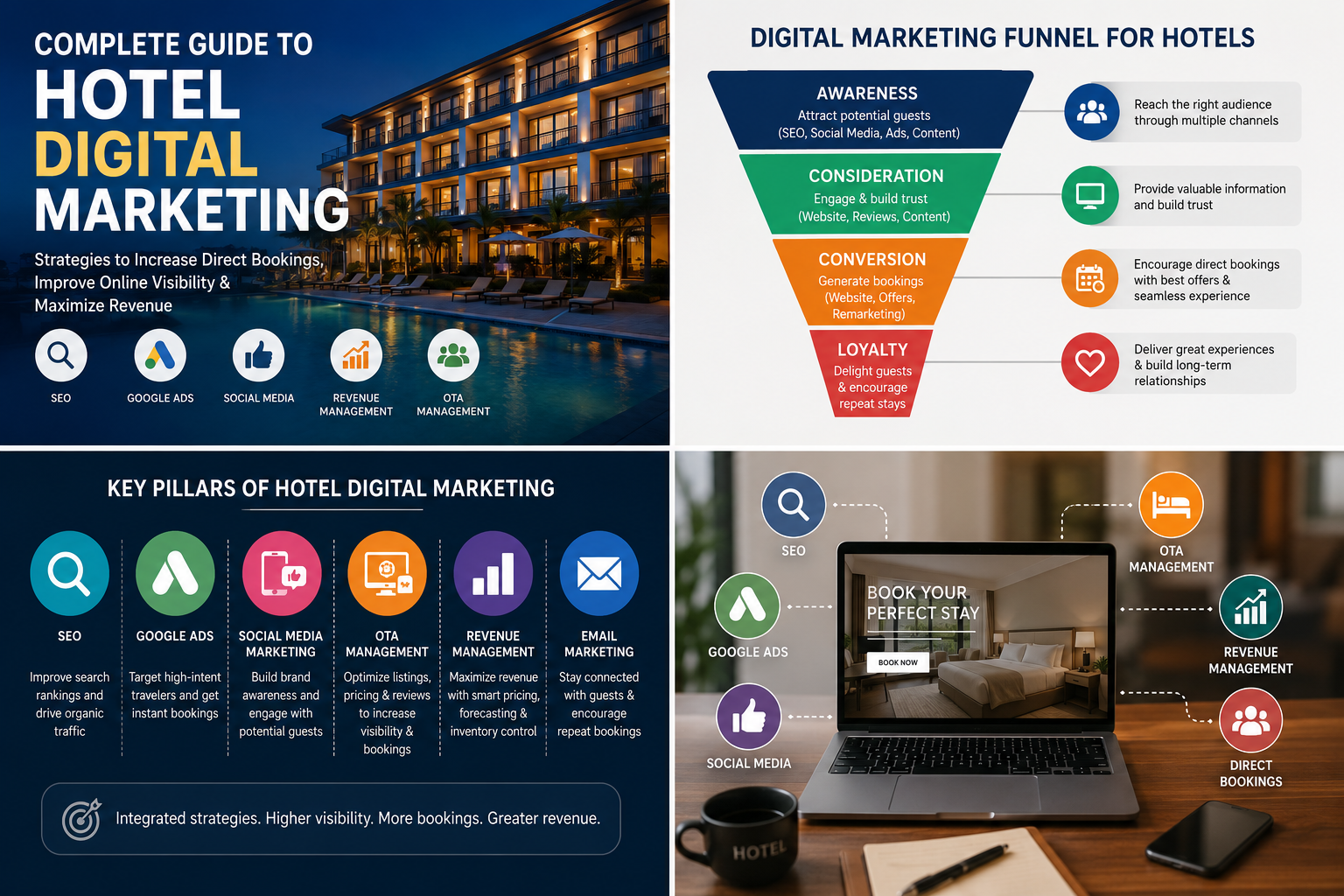
Discover the complete Hotel Digital Marketing guide covering SEO, OTA Management, Google Ads, Social Media Marketing, Revenue Management, and strategies to increase direct bookings and hotel revenue.
Table of Contents
- Introduction
- What is Hotel Digital Marketing?
- Why Digital Marketing is Important for Hotels
- Benefits of Hotel Digital Marketing
- Traditional Marketing vs Hotel Digital Marketing
- Understanding the Hotel Customer Journey
- Building a Successful Hotel Digital Marketing Strategy
Introduction
The hospitality industry has changed dramatically over the past decade. Today’s travelers no longer rely solely on travel agents or printed brochures when planning a trip. Instead, they search online, compare hotels across multiple platforms, read guest reviews, browse photos and videos, check Google Maps, visit hotel websites, and often make booking decisions within minutes.
This shift has transformed how hotels attract guests and generate revenue. Whether you own a luxury resort, boutique hotel, business hotel, homestay, villa, banquet property, or budget accommodation, your online presence directly influences occupancy rates and profitability.
This is where Hotel Digital Marketing becomes essential.
Hotel digital marketing is more than just running advertisements or posting on social media. It is a comprehensive strategy that combines search engine optimization (SEO), paid advertising, social media marketing, content creation, email campaigns, online reputation management, local SEO, website optimization, and OTA (Online Travel Agency) management to attract the right audience and convert them into paying guests.
A well-executed digital marketing strategy helps hotels:
- Increase direct bookings
- Reduce dependency on OTAs
- Improve occupancy throughout the year
- Build a trusted brand
- Enhance guest loyalty
- Generate consistent revenue
- Reach both domestic and international travelers
In today’s competitive hospitality market, having excellent rooms and exceptional service alone is no longer enough. Guests discover hotels online before they ever experience them in person. If your competitors rank higher on Google, appear more frequently on social media, or maintain stronger online reviews, they are likely capturing bookings that could have been yours.
This comprehensive guide explains everything hotel owners, general managers, revenue managers, marketers, and hospitality professionals need to know about hotel digital marketing. Whether you are starting from scratch or looking to refine your existing strategy, you’ll find practical insights that can help improve visibility, bookings, and long-term growth.
What is Hotel Digital Marketing?
Definition
Hotel Digital Marketing refers to the use of digital channels and online marketing techniques to promote hotels, attract potential guests, increase direct bookings, strengthen brand awareness, and maximize revenue.
Unlike traditional marketing, digital marketing enables hotels to reach highly targeted audiences based on their location, travel interests, search behavior, demographics, and booking intent.
A successful hotel digital marketing strategy integrates multiple channels into a unified approach, ensuring that potential guests encounter your property at every stage of their booking journey.
Core Components of Hotel Digital Marketing
Search Engine Optimization (SEO)
SEO improves your hotel’s visibility on search engines like Google. When travelers search for terms such as:
- Best hotels in Jaipur
- Luxury hotel near airport
- Budget hotels in Goa
- Family resorts in Udaipur
a well-optimized website has a higher chance of appearing on the first page of search results. Since most users rarely look beyond the first page, strong SEO can significantly increase qualified traffic and direct bookings.
Pay-Per-Click Advertising (PPC)
Paid advertising platforms such as Google Ads allow hotels to appear instantly for relevant search queries. PPC campaigns are particularly effective for:
- Seasonal promotions
- Weekend getaway packages
- Holiday offers
- Last-minute deals
- Local staycations
With proper targeting and budget management, PPC can deliver measurable returns by reaching travelers with high booking intent.
Travel decisions are highly visual. Platforms like Instagram and Facebook allow hotels to showcase:
- Rooms and suites
- Dining experiences
- Swimming pools
- Event venues
- Local attractions
- Guest experiences
- Behind-the-scenes content
Engaging social media content helps build trust, inspire travel, and encourage direct inquiries.
Informative and engaging content attracts organic traffic while positioning your hotel as an authority.
Examples include:
- Local travel guides
- Destination itineraries
- Seasonal travel tips
- Event calendars
- Restaurant recommendations
- Guest stories
Quality content not only supports SEO but also keeps potential guests engaged with your brand.
Email remains one of the highest-return marketing channels for hotels. Personalized campaigns can promote:
- Exclusive offers
- Loyalty rewards
- Festival packages
- Birthday discounts
- Repeat guest incentives
- Event announcements
Maintaining communication with previous guests encourages repeat bookings and long-term relationships.
Guest reviews heavily influence booking decisions. Effective reputation management involves:
- Monitoring review platforms
- Responding promptly to feedback
- Encouraging satisfied guests to leave reviews
- Addressing concerns professionally
- Demonstrating a commitment to guest satisfaction
A strong review profile builds credibility and increases conversion rates.
Online Travel Agencies (OTAs) such as Booking.com, Expedia, Agoda, and Airbnb play a significant role in hotel distribution. Proper OTA management includes:
- Optimizing listings
- Maintaining accurate room inventory
- Updating pricing
- Using high-quality images
- Writing compelling descriptions
- Monitoring competitor pricing
- Participating strategically in promotional programs
Effective OTA management increases visibility while supporting overall revenue goals.
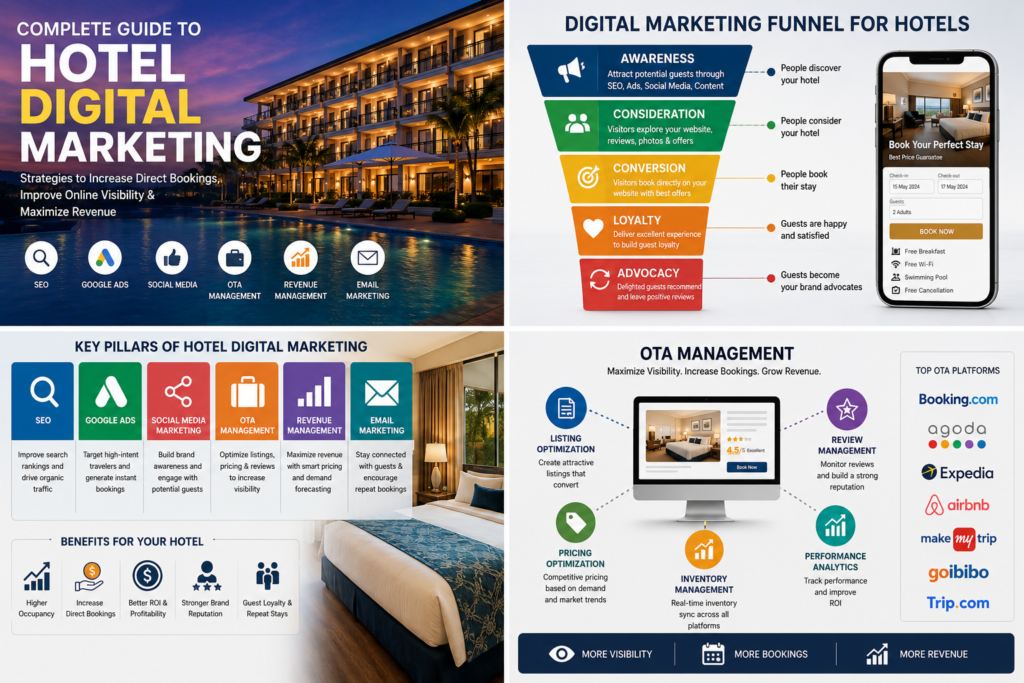
Why Hotel Digital Marketing is Important
The hospitality industry is increasingly competitive, with thousands of hotels competing for the same travelers. Guests expect to find detailed information online before making a reservation.
A robust digital marketing strategy helps hotels:
Reach Travelers During Their Research Phase
Most travelers begin planning online. They compare properties, explore destinations, read reviews, and evaluate amenities before booking. If your hotel is not visible during this stage, you risk losing potential guests before they even consider your property.
Increase Direct Bookings
Direct bookings offer several advantages:
- Lower commission costs
- Better profit margins
- Greater control over guest relationships
- Access to guest data
- Opportunities for upselling
- Enhanced loyalty-building
Digital marketing drives traffic directly to your website, reducing reliance on third-party booking platforms.
Improve Brand Visibility
Consistent branding across search engines, social media, OTAs, and review sites increases recognition and trust.
Hotels with a strong online presence are more likely to be remembered and recommended.
Build Trust Through Social Proof
Travelers often rely on reviews, ratings, and user-generated content before making reservations.
Positive online feedback reassures potential guests and influences their purchasing decisions.
Generate Qualified Leads
Unlike traditional advertising, digital marketing allows hotels to target specific audiences based on:
- Destination interests
- Travel intent
- Budget
- Family size
- Geographic location
- Device usage
- Previous website behavior
This precision improves marketing efficiency and increases booking conversions.
Benefits of Hotel Digital Marketing
1. Higher Occupancy Rates
Consistent online visibility ensures your property reaches potential guests throughout the year, helping reduce seasonal fluctuations.
2. Better Return on Investment
Digital campaigns can be measured and optimized continuously, allowing hotels to invest in strategies that deliver the highest returns.
3. Enhanced Customer Relationships
Personalized communication before, during, and after a guest’s stay fosters loyalty and encourages repeat business.
4. Stronger Competitive Position
Hotels that invest in digital marketing are better equipped to compete with larger brands by highlighting unique experiences, personalized service, and local authenticity.
5. Increased Revenue Opportunities
Effective digital marketing supports:
- Room bookings
- Restaurant reservations
- Spa appointments
- Event bookings
- Wedding packages
- Conference facilities
- Local experiences
By promoting multiple revenue streams, hotels can maximize overall profitability.
Traditional Marketing vs Hotel Digital Marketing
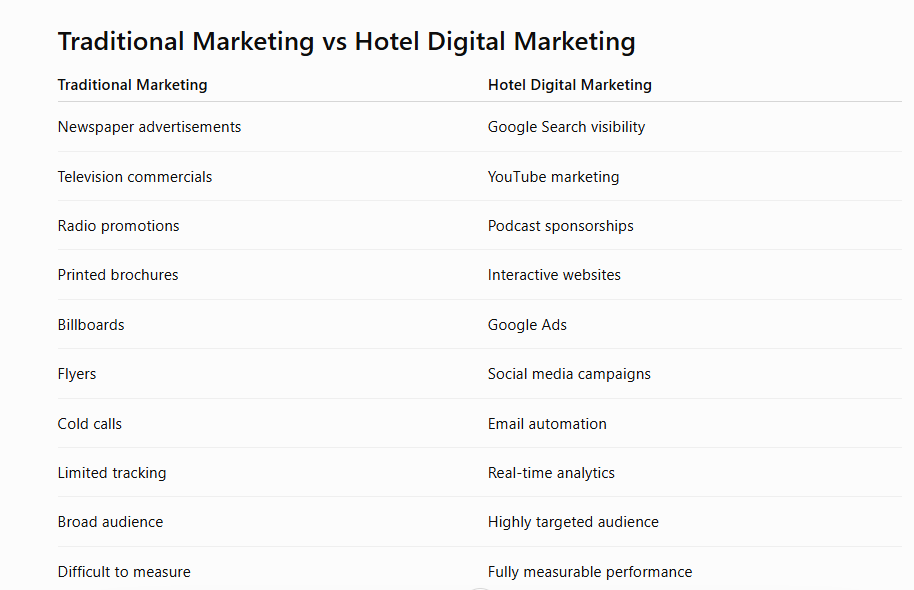
| Traditional Marketing | Hotel Digital Marketing |
| Newspaper advertisements | Google Search visibility |
| Television commercials | YouTube marketing |
| Radio promotions | Podcast sponsorships |
| Printed brochures | Interactive websites |
| Billboards | Google Ads |
| Flyers | Social media campaigns |
| Cold calls | Email automation |
| Limited tracking | Real-time analytics |
| Broad audience | Highly targeted audience |
| Difficult to measure | Fully measurable performance |
While traditional marketing still has value in certain contexts, digital marketing offers greater precision, flexibility, and measurable outcomes.
Understanding the Hotel Customer Journey
A successful marketing strategy aligns with the guest’s decision-making process.
Stage 1: Awareness
The traveler realizes they need accommodation for an upcoming trip.
They begin searching online for destinations, hotels, and travel inspiration.
Marketing Channels
- Google Search
- YouTube
- Travel blogs
Stage 2: Consideration
The traveler compares multiple hotels by evaluating:
- Reviews
- Prices
- Amenities
- Photos
- Location
- Cancellation policies
- Dining options
Hotels with compelling content, strong reviews, and optimized websites are more likely to move to the next stage.
Stage 3: Decision
The guest chooses where to book based on trust, value, convenience, and pricing.
A seamless booking experience, transparent information, and persuasive offers can significantly increase direct bookings.
Stage 4: Experience
The guest evaluates every aspect of their stay.
Positive experiences often lead to favorable reviews, social media shares, and recommendations.
Stage 5: Loyalty
Satisfied guests become repeat customers and brand advocates.
Through email marketing, loyalty programs, and personalized communication, hotels can encourage repeat visits and long-term relationships.
Building a Successful Hotel Digital Marketing Strategy
An effective strategy begins with clear objectives. Before investing in marketing channels, hotels should define measurable goals such as:
- Increasing direct bookings
- Improving occupancy during off-peak seasons
- Growing website traffic
- Enhancing online reputation
- Expanding social media engagement
- Generating more banquet or event inquiries
- Increasing restaurant reservations
- Boosting average booking value
Every campaign should align with these objectives and be supported by data-driven decision-making rather than assumptions
Hotel SEO: The Foundation of Hotel Digital Marketing
Search Engine Optimization (SEO) is one of the most cost-effective and sustainable components of Hotel Digital Marketing. Unlike paid advertising, SEO continues to generate qualified traffic over time by helping your hotel appear in organic search results.
When potential guests search for phrases such as:
- Luxury hotel in Jaipur
- Best hotel near airport
- Family resort in Goa
- Business hotel in Delhi
- Budget hotel in Varanasi
Google evaluates hundreds of ranking factors to determine which websites deserve to appear first.
Hotels that invest in SEO gain long-term visibility, stronger brand credibility, and more direct bookings.
Why Hotel SEO Matters
Every day, thousands of travelers search online before making a reservation.
If your hotel ranks on the first page of Google, you can attract visitors who are already planning a trip and actively looking for accommodation.
Effective Hotel SEO helps you:
- Increase organic website traffic
- Generate direct bookings
- Reduce OTA dependency
- Improve brand authority
- Lower customer acquisition costs
- Reach domestic and international travelers
Unlike paid campaigns that stop producing results when the budget ends, SEO continues delivering value when maintained consistently.
Types of Hotel SEO
1. On-Page SEO
On-page SEO focuses on optimizing the content and structure of individual pages.
Key elements include:
SEO-Friendly Titles
Every page should have a unique title containing the primary keyword.
Example:
Hotel Digital Marketing Services | Digital Janxii
Meta Descriptions
A compelling meta description encourages users to click.
Example:
Grow your hotel with expert Hotel Digital Marketing services including SEO, Google Ads, OTA Management, Website Development, and Social Media Marketing.
URL Structure
Use short and descriptive URLs.
Good:
/hotel-digital-marketing
Avoid:
/page?id=2456
Heading Structure
Organize every page logically.
Example:
H1 – Hotel Digital Marketing
H2 – Why Hotels Need Digital Marketing
H3 – Hotel SEO
H3 – Google Ads
H3 – OTA Management
This hierarchy helps both readers and search engines understand the content.
Internal Linking
Connect related pages naturally.
Example:
A blog about SEO can link to:
- OTA Management
- Website Development
- Google Ads
- Social Media Marketing
- Revenue Management
Internal links improve navigation and distribute authority across your website.
2. Technical SEO
Technical SEO ensures search engines can crawl and index your website efficiently.
Important factors include:
Website Speed
Guests expect fast-loading websites.
A slow website increases bounce rates and decreases bookings.
Aim for:
- Fast mobile loading
- Optimized images
- Efficient caching
- Lightweight code
Mobile-Friendly Design
Most hotel searches now occur on smartphones.
A responsive website should provide:
- Easy navigation
- Large buttons
- Fast booking forms
- Clear room information
Secure Website (HTTPS)
Security builds trust.
Always use SSL certificates to protect visitor information.
XML Sitemap
An XML sitemap helps Google discover all important pages on your website.
Robots.txt
This file tells search engines which pages they should or should not crawl.
3. Off-Page SEO
Off-page SEO strengthens your website’s authority through external signals.
Examples include:
- Industry directory listings
- Travel websites
- Hospitality blogs
- Local business citations
- Press mentions
- Guest articles
- Quality backlinks
Focus on earning links from reputable, relevant websites rather than pursuing large quantities of low-quality links.
Local SEO for Hotels
Local SEO is essential because guests frequently search with location-specific intent.
Examples include:
- Hotels near me
- Best hotel in Jaipur
- Luxury hotel in Goa
- Hotels near Varanasi Railway Station
Optimizing for local searches can significantly increase qualified traffic.
Google Business Profile
Your Google Business Profile is often the first thing potential guests see.
Complete every section:
- Hotel name
- Address
- Phone number
- Website
- Booking link
- Business hours
- Categories
- Amenities
- Photos
- Videos
- Frequently Asked Questions
Keep this information accurate and updated.
Encourage Reviews
Positive reviews influence booking decisions and local rankings.
Encourage guests to leave honest feedback after checkout.
When responding:
- Thank guests for positive reviews.
- Address concerns professionally.
- Explain improvements where appropriate.
Professional responses demonstrate excellent customer service.
Local Citations
Ensure your hotel information is consistent across:
- Google Business Profile
- Booking platforms
- Local directories
- Tourism portals
- Travel websites
- Business listings
Consistency builds trust with both users and search engines.
Hotel Website Optimization
Your website is your most valuable digital asset.
Every marketing effort ultimately aims to bring visitors here and convert them into guests.
Clear Homepage
Visitors should immediately understand:
- What your hotel offers
- Where it is located
- Why they should choose it
- How to book
Avoid clutter and prioritize clarity.
High-Quality Photography
Professional images strongly influence booking decisions.
Include:
- Exterior views
- Guest rooms
- Bathrooms
- Restaurant
- Lobby
- Swimming pool
- Conference spaces
- Banquet halls
- Local attractions
Use authentic photography rather than generic stock images whenever possible.
Fast Booking Process
Minimize friction.
Guests should be able to:
- Check availability
- View rates
- Compare room types
- Complete a reservation in a few simple steps
A complicated booking process can lead to abandoned reservations.
Trust Signals
Build confidence by displaying:
- Guest reviews
- Awards
- Certifications
- Secure payment badges
- Contact information
- Google Maps location
These elements reassure potential guests before booking.
Content Marketing for Hotels
Content marketing helps attract travelers before they decide where to stay.
Useful content answers questions, provides travel inspiration, and demonstrates local expertise.
Types of Hotel Content
Examples include:
- Destination guides
- Local attraction recommendations
- Festival calendars
- Food guides
- Weekend itineraries
- Family travel tips
- Business travel advice
- Wedding planning resources
Helpful content can attract visitors who later become guests.
Blogging Strategy
Consistent blogging improves topical authority and provides more opportunities to rank for relevant searches.
Potential topics include:
- Best Places to Visit in Jaipur
- Top Tourist Attractions in Goa
- Things to Do Near Our Hotel
- How to Plan a Destination Wedding
- Business Travel Tips
- Family Vacation Planning Guide
- Weekend Getaway Ideas
Write for real travelers first, while naturally incorporating relevant keywords.
Image SEO
Images can also contribute to search visibility.
Best practices include:
Descriptive File Names
Instead of:
IMG_1234.jpg
Use:
luxury-hotel-room-jaipur.jpg
Alt Text
Describe the image clearly.
Example:
Deluxe hotel room with king-size bed and city view.
Alt text improves accessibility and helps search engines understand image content.
Image Compression
Compress images to improve page speed without noticeably reducing quality.
Keyword Research for Hotels
Successful SEO begins with understanding how travelers search.
Focus on topics that match user intent.
Examples include:
Informational Searches
- How to choose a hotel
- Best time to visit Goa
- Hotel booking tips
These attract users early in the planning process.
Commercial Searches
- Hotel Digital Marketing Agency
- Hotel SEO Services
- Hotel Website Development
- OTA Management Company
These indicate that users are evaluating service providers.
Transactional Searches
- Book hotel in Jaipur
- Luxury resort in Goa
- Best hotel near airport
These users are close to making a reservation.
Creating content for each stage of the customer journey helps build long-term visibility.
Measuring SEO Success
Track meaningful metrics rather than rankings alone.
Important indicators include:
- Organic traffic
- Direct bookings
- Conversion rate
- Average session duration
- Pages per session
- Bounce rate
- Keyword visibility
- Local search performance
- Google Business Profile interactions
- Revenue generated from organic traffic
Review performance regularly and refine your strategy based on data.
Common Hotel SEO Mistakes
Avoid these common issues:
- Publishing duplicate content
- Neglecting mobile optimization
- Slow-loading pages
- Broken internal links
- Outdated room information
- Inconsistent contact details
- Low-quality backlinks
- Thin or unhelpful content
- Ignoring local SEO
- Failing to update older articles
Addressing these issues can improve user experience and search visibility.
Google Ads for Hotels
Search Engine Optimization (SEO) is a long-term investment, but hotels often need immediate visibility to generate bookings during peak seasons, special events, holidays, or promotional campaigns. This is where Google Ads becomes an essential part of a comprehensive Hotel Digital Marketing strategy.
Google Ads allows hotels to appear at the top of search results for high-intent searches, helping reach travelers who are actively looking to book accommodation.
Why Hotels Should Use Google Ads
Google Ads offers several advantages for hospitality businesses:
- Reach potential guests with high booking intent.
- Promote seasonal offers and packages.
- Drive direct bookings through your website.
- Target travelers based on location, interests, and search behavior.
- Measure campaign performance in real time.
- Adjust budgets and bids based on demand.
For hotels, Google Ads can complement SEO by capturing immediate demand while organic rankings continue to grow.
Types of Google Ads for Hotels
Search Ads
Search ads appear when users type queries into Google, such as:
- Best hotel in Jaipur
- Luxury resort in Goa
- Family hotel near Taj Mahal
- Business hotel in Delhi
These ads connect your property with users who are already searching for accommodation.
Display Ads
Display ads appear across Google’s partner websites and apps. They are useful for:
- Brand awareness
- Seasonal promotions
- Remarketing previous visitors
- Promoting events and offers
High-quality visuals and concise messaging are key to effective display campaigns.
Performance Max Campaigns
Performance Max campaigns use Google’s automation to serve ads across Search, Display, YouTube, Gmail, Maps, and Discover.
When supplied with strong creative assets and clear conversion goals, they can help hotels reach potential guests across multiple touchpoints.
Video Ads
Short promotional videos can highlight:
- Guest rooms
- Dining experiences
- Spa facilities
- Wedding venues
- Scenic surroundings
- Guest testimonials
Video content can inspire travelers during the planning stage.
Best Practices for Hotel Google Ads
- Create dedicated landing pages for each campaign.
- Highlight unique selling points (USPs).
- Use high-quality images and videos.
- Include clear calls to action.
- Track conversions, not just clicks.
- Refine campaigns using performance data.
Social Media Marketing for Hotels
Travel is a visual experience, making social media one of the most effective channels for hotel marketing.
Platforms like Instagram, Facebook, LinkedIn, Pinterest, and YouTube help hotels showcase their property, build trust, and engage potential guests before they book.
Benefits of Social Media Marketing
A consistent social media presence can help:
- Increase brand awareness.
- Showcase hotel experiences.
- Promote offers and events.
- Build guest trust through authentic content.
- Encourage user-generated content.
- Generate inquiries and direct bookings.
Instagram Marketing
Instagram is particularly effective for hospitality businesses because it emphasizes visual storytelling.
Content ideas include:
- Room tours
- Sunrise and sunset views
- Restaurant dishes
- Poolside experiences
- Local attractions
- Behind-the-scenes moments
- Guest celebrations
- Wedding setups
- Seasonal décor
Consistent, authentic visuals help potential guests imagine their stay.
Facebook Marketing
Facebook remains valuable for:
- Promoting offers
- Event announcements
- Community engagement
- Reviews
- Customer support
- Local targeting
Hotels can use Facebook Pages to keep guests informed and connected.
LinkedIn Marketing
LinkedIn is especially useful for:
- Business hotels
- Corporate event venues
- Conference facilities
- Hospitality recruitment
- Industry networking
Sharing insights about hospitality trends and company achievements can strengthen your professional reputation.
Paid Social Media Advertising
Paid campaigns on social platforms allow hotels to reach targeted audiences.
You can target users based on:
- Age
- Location
- Travel interests
- Recent travel behavior
- Income segments
- Previous website visits
- Engagement with your content
Campaigns can promote:
- Weekend packages
- Wedding venues
- Restaurant specials
- Corporate events
- Holiday promotions
- Staycation offers
Content Marketing for Hospitality Brands
Publishing valuable content helps hotels build trust and authority.
Content ideas include:
- Travel guides
- Destination itineraries
- Local event calendars
- Food recommendations
- Family travel tips
- Business travel advice
- Seasonal activities
Well-written content supports both SEO and guest engagement.
Video Marketing
Video is one of the most engaging content formats for hospitality businesses.
Types of videos to create:
Hotel Tour
Walk viewers through:
- Lobby
- Rooms
- Suites
- Restaurant
- Pool
- Gym
- Conference facilities
Guest Testimonials
Authentic guest experiences build credibility and reassure potential visitors.
Destination Guides
Show nearby attractions, restaurants, shopping areas, and cultural experiences.
Helping travelers plan their trip increases the value of your content.
Event Highlights
If your property hosts:
- Weddings
- Conferences
- Corporate meetings
- Birthday celebrations
- Festivals
Create highlight videos to showcase your venue’s capabilities.
Email Marketing for Hotels
Email marketing helps hotels stay connected with guests before and after their stay.
Possible campaigns include:
- Booking confirmations
- Pre-arrival information
- Welcome messages
- Post-stay feedback requests
- Birthday offers
- Loyalty rewards
- Seasonal promotions
Personalized, timely emails can encourage repeat bookings and strengthen guest relationships.
WhatsApp Marketing
Many guests prefer quick communication through messaging apps.
WhatsApp can be used for:
- Booking inquiries
- Reservation confirmations
- Check-in instructions
- Customer support
- Promotional updates (with consent)
Respond promptly and keep messages helpful rather than overly promotional.
Online Reputation Management
Reviews play a significant role in booking decisions.
Encourage guests to leave honest reviews on platforms they use.
When responding:
- Thank guests for positive feedback.
- Acknowledge concerns respectfully.
- Explain improvements when appropriate.
- Avoid defensive language.
Consistent, professional responses demonstrate commitment to guest satisfaction.
Hotel Branding
A strong brand helps guests remember your property beyond price alone.
Elements of branding include:
Logo
A simple, memorable logo that reflects your hotel’s identity.
Brand Colors
Use consistent colors across:
- Website
- Social media
- Brochures
- Signage
- Advertisements
Brand Voice
Whether your hotel is luxury, boutique, family-friendly, or business-focused, maintain a consistent tone in all communications.
Photography Style
Use authentic, high-quality images that accurately represent the guest experience.
Consistency builds trust.
Creating a Hotel Marketing Funnel
An effective marketing funnel guides potential guests from discovery to loyalty.
Awareness
Guests discover your hotel through:
- Google Search
- Social media
- Online ads
- Travel blogs
- Local directories
Consideration
Potential guests compare:
- Prices
- Reviews
- Amenities
- Location
- Photos
- Policies
Provide clear, accurate information to help them evaluate your property.
Conversion
Encourage direct bookings with:
- Transparent pricing
- Simple booking process
- Secure payment
- Clear cancellation policies
- Exclusive direct-booking benefits
Retention
After the stay:
- Send thank-you emails.
- Request feedback.
- Offer loyalty discounts.
- Share future promotions.
Repeat guests are often more cost-effective to acquire than new ones.
Measuring Marketing Performance
Track metrics that align with business goals, such as:
- Website traffic
- Direct bookings
- Conversion rate
- Cost per acquisition (CPA)
- Return on ad spend (ROAS)
- Occupancy rate
- Average daily rate (ADR)
- Revenue per available room (RevPAR)
- Email open rates
- Social media engagement
Regular analysis helps identify which channels contribute most effectively to revenue.
Integrating Your Marketing Channels
The strongest results come from combining channels rather than relying on a single tactic.
For example:
- SEO attracts long-term organic traffic.
- Google Ads captures immediate booking intent.
- Social media builds brand awareness and engagement.
- Email marketing encourages repeat stays.
- OTA management expands distribution.
- Reputation management reinforces trust.
Together, these efforts create a cohesive digital marketing strategy that supports sustainable growth.
Complete OTA Management Guide
What is OTA Management?
OTA (Online Travel Agency) Management is the process of managing a hotel’s presence across online booking platforms such as Booking.com, Expedia, Agoda, Airbnb, MakeMyTrip, Goibibo, Trip.com, Hotels.com, and other travel marketplaces.
Effective OTA management involves much more than simply listing your property. It requires continuous optimization of listings, pricing, inventory, promotions, guest communication, reviews, and performance analytics to maximize bookings while maintaining profitability.
A well-managed OTA strategy increases visibility, improves occupancy, enhances guest satisfaction, and supports overall revenue growth.
Why OTA Management is Important
Millions of travelers use OTAs every day to compare hotels, prices, amenities, locations, and guest reviews before making a reservation. If your property is not optimized, competitors are more likely to capture these bookings.
Benefits of professional OTA Management include:
- Increased online visibility
- Higher occupancy rates
- Improved property ranking
- Better booking conversion
- Dynamic pricing management
- More international exposure
- Better guest experience
- Improved review scores
- Increased revenue
Essential Components of OTA Management
1. Optimized Hotel Profile
Your listing should include:
- Professional property description
- High-quality room descriptions
- Amenities list
- Nearby attractions
- Hotel policies
- Location highlights
- Transportation details
Every detail should answer a guest’s questions before they ask.
2. Professional Photography
Images significantly influence booking decisions.
Include:
- Exterior
- Lobby
- Reception
- Deluxe Rooms
- Suites
- Bathrooms
- Restaurant
- Swimming Pool
- Spa
- Banquet Hall
- Conference Room
- Gym
- Rooftop
- Parking
- Local Attractions
Update images regularly to reflect renovations and seasonal experiences.
3. Competitive Pricing
Pricing should change according to:
- Season
- Weekday vs Weekend
- Holidays
- Local Events
- Occupancy
- Competitor Rates
- Demand Forecast
Avoid using one fixed rate throughout the year.
4. Inventory Management
Maintain accurate room availability across all booking platforms.
Incorrect inventory can result in:
- Overbookings
- Revenue loss
- Poor guest experience
- Negative reviews
5. Review Management
Respond to every review.
Positive reviews improve trust.
Negative reviews provide an opportunity to demonstrate professionalism and show potential guests that you value feedback and continuous improvement.
6. OTA Promotions
Promotional tools include:
- Early Bird Discounts
- Last Minute Offers
- Mobile Discounts
- Long Stay Discounts
- Genius Programs (where appropriate)
- Seasonal Packages
Evaluate promotions carefully to ensure they align with your revenue goals.
Revenue Management for Hotels
Revenue Management is the process of selling the right room, to the right guest, at the right time, through the right channel, at the right price.
The objective is not simply to sell more rooms, but to maximize total revenue.
Importance of Revenue Management
Hotels experience fluctuating demand throughout the year.
Without revenue management:
- Rooms may be underpriced during peak demand.
- Occupancy may remain low during off-peak periods.
- Profitability can suffer despite good occupancy.
Revenue management helps optimize both occupancy and average room rate.
Revenue Management Strategies
Dynamic Pricing
Adjust room prices according to:
- Demand
- Competitor pricing
- Local events
- Seasonality
- Booking pace
- Remaining inventory
Forecasting
Forecast future demand by analyzing:
- Historical occupancy
- Booking trends
- Festivals
- Conferences
- School holidays
- Weather patterns
Accurate forecasting supports better pricing and inventory decisions.
Length of Stay Controls
Encourage guests to stay longer through:
- Stay 3 Pay 2 Offers
- Weekly Discounts
- Corporate Packages
- Extended Stay Rates
Upselling
Increase average booking value by offering:
- Room upgrades
- Airport transfers
- Breakfast packages
- Spa treatments
- Candlelight dinners
- Local tours
- Late checkout
- Event packages
Cross Selling
Promote additional services such as:
- Restaurant reservations
- Banquet bookings
- Meeting rooms
- Laundry
- Car rental
- Adventure activities
Cross-selling enhances guest experience while increasing ancillary revenue.
Channel Management
Hotels distribute inventory through multiple sales channels.
Examples include:
- Official Website
- Booking.com
- Expedia
- Agoda
- Airbnb
- MakeMyTrip
- Goibibo
- Travel Agents
- Corporate Contracts
Managing each platform manually increases the risk of pricing inconsistencies and overbookings.
What is a Channel Manager?
A Channel Manager is software that synchronizes:
- Room Inventory
- Availability
- Pricing
- Restrictions
across multiple booking channels simultaneously.
This helps maintain consistency and reduces manual work.
Benefits of Channel Management
- Real-time inventory updates
- Reduced overbooking risk
- Faster rate updates
- Centralized management
- Time savings
- Better distribution control
- Improved revenue opportunities
Strategies to Increase Direct Bookings
While OTAs are valuable distribution partners, direct bookings typically provide higher profit margins and stronger guest relationships.
Build a High-Converting Website
Your website should include:
- Mobile-friendly design
- Fast loading speed
- Secure booking engine
- High-quality images
- Clear room descriptions
- Transparent pricing
- Simple navigation
- Multiple payment options
Invest in Hotel SEO
Ranking for relevant local and destination-based searches helps attract travelers directly to your website.
Examples include destination guides, local attraction pages, and helpful travel content that answers guest questions.
Optimize Google Business Profile
Keep your profile updated with:
- Photos
- Amenities
- Contact details
- Website
- Booking link
- Business hours
- Guest reviews
An accurate profile improves local visibility and trust.
Offer Direct Booking Benefits
Encourage guests to book directly by offering value that aligns with your business model, such as:
- Flexible cancellation policies
- Complimentary breakfast (where feasible)
- Welcome drink
- Early check-in (subject to availability)
- Late checkout (subject to availability)
- Loyalty rewards
- Exclusive member rates
Ensure offers are sustainable and consistent with any OTA parity obligations that apply to your property.
Use Email Marketing
Stay connected with previous guests.
Share:
- Seasonal packages
- Festival offers
- Birthday greetings
- Anniversary discounts
- Loyalty rewards
Repeat guests are often more likely to book directly.
Encourage Positive Reviews
Guests often compare review scores before booking.
Request honest reviews after checkout and respond professionally to all feedback.
Leverage Social Media
Regularly publish:
- Property updates
- Guest experiences
- Destination highlights
- Behind-the-scenes content
- Offers
- Events
Authentic storytelling can inspire future bookings.
Conversion Rate Optimization (CRO)
Driving traffic to your website is only part of the process. Conversion Rate Optimization (CRO) focuses on increasing the percentage of visitors who complete a booking or inquiry.
Key CRO Strategies
Improve Page Speed
Fast websites reduce abandonment and improve user satisfaction.
Simplify Booking
Reduce unnecessary steps.
Allow guests to complete reservations quickly and confidently.
Use High-Quality Images
Professional visuals help guests understand what to expect.
Display Reviews
Showcase recent guest feedback prominently on key booking pages.
Clear Call-to-Action Buttons
Examples include:
- Book Now
- Check Availability
- Get Best Price
- Contact Us
Place these buttons where they are easy to find.
Build Trust
Include:
- Secure payment indicators
- Contact information
- Cancellation policies
- Awards or certifications (if applicable)
These elements reassure visitors during the booking process.
Common Hotel Digital Marketing Mistakes
Many hotels invest in marketing but fail to achieve expected results due to avoidable mistakes.
1. Ignoring SEO
Without search visibility, potential guests may never discover your website.
2. Slow Website
Slow loading times can increase bounce rates and reduce conversions.
3. Poor Mobile Experience
Many travelers search and book on mobile devices. A responsive design is essential.
4. Low-Quality Images
Outdated or poor-quality photos reduce confidence.
Invest in professional photography.
5. Inconsistent Branding
Maintain consistent messaging, visuals, and contact information across your website, OTAs, and social platforms.
6. Ignoring Reviews
Unanswered reviews may create the impression that guest feedback is not valued.
Respond promptly and professionally.
7. Overdependence on OTAs
Relying exclusively on OTAs can increase commission costs and limit direct guest relationships.
Balance OTA distribution with efforts to grow direct bookings.
8. No Analytics
Track website performance, booking sources, and campaign effectiveness to guide future decisions.
9. Irregular Social Media Activity
Posting inconsistently can reduce engagement.
Develop a content calendar and publish regularly.
10. No Long-Term Marketing Plan
Sustainable growth requires ongoing optimization rather than one-time campaigns.
Frequently Asked Questions (FAQ)
1. What is Hotel Digital Marketing?
It is the use of digital channels such as SEO, paid advertising, social media, email marketing, content marketing, and OTA management to attract guests and increase bookings.
2. Why is digital marketing important for hotels?
It improves online visibility, increases direct bookings, builds brand awareness, and supports long-term revenue growth.
3. What is OTA Management?
OTA Management involves optimizing and managing a hotel’s listings, pricing, inventory, and performance across online travel agencies.
4. Which OTA platforms are most popular?
Examples include Booking.com, Expedia, Agoda, Airbnb, MakeMyTrip, and Goibibo.
5. What is Hotel SEO?
Hotel SEO improves a hotel’s visibility in search engines so travelers can discover the property through relevant searches.
6. How long does SEO take?
Meaningful improvements often take several months, depending on competition, website quality, and content consistency.
7. Should hotels use Google Ads?
Google Ads can be effective for reaching travelers with immediate booking intent, especially during promotional periods.
8. What is Local SEO?
Local SEO helps hotels appear in location-based searches and map results.
9. Why are guest reviews important?
Reviews influence booking decisions and help build trust with potential guests.
10. How can hotels increase direct bookings?
Invest in a user-friendly website, SEO, Google Business Profile optimization, email marketing, and value-driven direct booking offers.
11. What is Revenue Management?
Revenue Management is the practice of optimizing pricing, inventory, and distribution to maximize revenue.
12. What is a Channel Manager?
A Channel Manager synchronizes rates and availability across multiple booking platforms.
13. Why is mobile optimization important?
Many travelers browse and book hotels using smartphones.
14. How often should hotels post on social media?
Consistency matters more than frequency. A regular publishing schedule is recommended.
15. Does content marketing help hotels?
Yes. Helpful travel guides and destination content can attract potential guests and strengthen brand authority.
16. How can hotels reduce OTA commissions?
Increase direct bookings through SEO, a strong website, email marketing, and loyalty initiatives.
17. Which metrics should hotels monitor?
Website traffic, direct bookings, conversion rate, occupancy, ADR, RevPAR, and return on advertising spend.
18. What is Conversion Rate Optimization?
CRO improves the percentage of website visitors who complete a booking or inquiry.
19. Should small hotels invest in digital marketing?
Yes. Digital marketing allows independent properties to compete effectively by reaching targeted audiences online.
20. Why should hotels work with a hospitality marketing agency?
A specialized agency understands hospitality trends, guest behavior, OTA management, SEO, paid advertising, and revenue-focused marketing strategies.
Conclusion
The hospitality industry continues to evolve as travelers increasingly research, compare, and book accommodations online. Hotels that embrace a comprehensive digital strategy are better positioned to attract qualified guests, improve occupancy, strengthen their brand, and increase long-term profitability.
Success does not depend on a single tactic. It comes from combining search engine optimization, high-performing websites, paid advertising, social media marketing, content creation, online reputation management, OTA optimization, revenue management, and data-driven decision-making into one integrated strategy.
Whether you operate a boutique hotel, luxury resort, business hotel, restaurant, banquet hall, travel company, or event venue, investing in digital marketing today helps build sustainable growth for tomorrow.
Partner with Digital Janxii
At Digital Janxii, we specialize in Hospitality Digital Marketing and OTA Management for hotels, resorts, restaurants, travel agencies, banquet halls, event management companies, villas, homestays, and other hospitality businesses worldwide.
Our services include:
- Hospitality SEO
- Google Ads & PPC Campaigns
- Social Media Marketing
- Website Design & Development
- OTA Management
- Revenue Management Support
- Google Business Profile Optimization
- Online Reputation Management
- Branding & Creative Design
- Content Marketing
If you’re ready to strengthen your hotel’s online presence and reach more travelers, Digital Janxii is ready to help.